
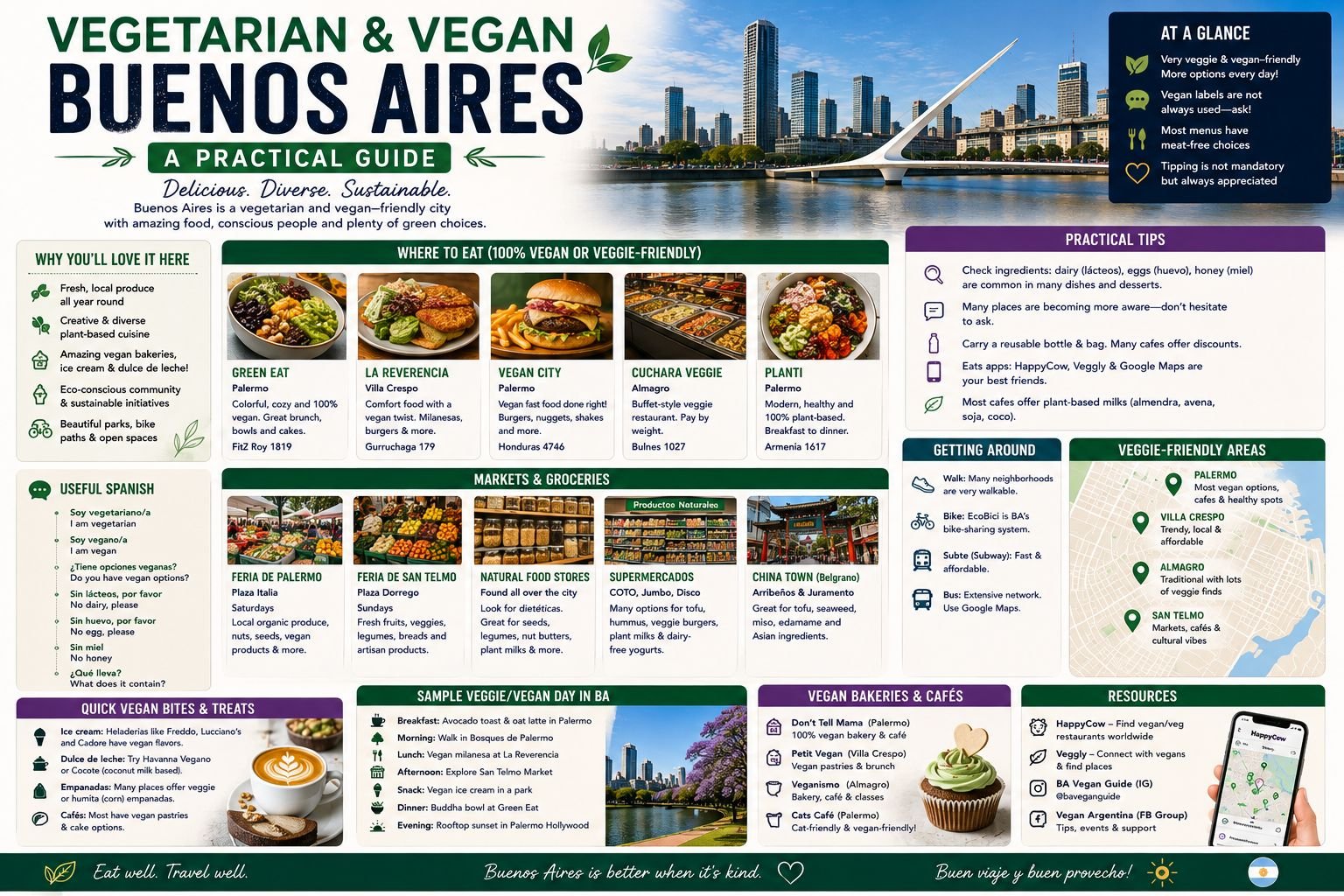
Buenos Aires has historically been a difficult city for vegetarians and particularly challenging for vegans. The Argentine food culture is centred on beef, and the parrilla (grillhouse) is the dominant restaurant format in a city where carnivorous eating is the default and the deep cultural assumption. This is the honest starting point: if you are vegetarian or vegan, Buenos Aires will require more navigation than many other international cities.
The good news is that the situation has improved significantly over the past decade. The city now has a substantial and growing number of genuinely good vegetarian and vegan restaurants, many in Palermo and San Telmo; the broader restaurant scene has expanded its vegetarian options; and the underlying Argentine food traditions have several naturally plant-based elements that are sometimes overlooked in the focus on beef.
The Naturally Plant-Based Argentine Food Tradition
Before the imported framework of “vegetarian restaurant,” it is worth noting that Argentine cuisine has excellent plant-based elements that are not marketed as vegetarian but are:
Empanadas de humita or espinaca: The humita (creamed corn) and espinaca y queso (spinach and cheese) empanada fillings are naturally vegetarian and are among the most traditional Argentine food experiences. Most empanadería shops have these options.
Locro: The traditional winter stew of the Andean regions, made with corn, beans, and squash, is naturally vegan in its basic form (though it is often prepared with pork). A very good locro is one of the finest things in Argentine cooking; finding a genuinely vegetable-only version requires asking specifically.
Provoleta: Grilled provolone cheese, a standard starter at Argentine parrillas. This is the vegetarian’s best friend at a parrilla: a generous slab of good provolone grilled in a cast iron pan until golden on the outside and melting inside, served with fresh herbs and olive oil. It is not a compromise; it is genuinely excellent.
Pasta: The Italian-Argentine pasta tradition produces excellent fresh pasta at many traditional restaurants, typically with tomato-based or cheese-based sauces that are naturally vegetarian.
Vegetarian and Vegan Restaurants
Buenos Aires has a significant number of dedicated vegetarian and vegan restaurants, concentrated in Palermo and to a lesser degree in San Telmo and Villa Crespo.
Bio (Humboldt 2192, Palermo): One of the oldest and most established vegetarian restaurants in the city, with an extensive menu of organic and natural food, good fresh juices, and a commitment to quality that makes it a reference point for vegetarian eating in Buenos Aires. Good value; reliably excellent.
Artemisia (Costa Rica 5893, Palermo): A well-regarded vegetarian and vegan restaurant in Palermo Soho with a creative kitchen that goes beyond the standard Buenos Aires vegetarian repertoire. Popular with the local Palermo community; booking recommended on weekends.
Sacro (Marcelo T de Alvear 1090, Centro): A vegan restaurant in the city centre with a strong menu covering the full range of vegan cooking from casual lunch through evening dining.
La Alacena (Lerma 322, Villa Crespo): One of the city’s most respected food shops and casual restaurant, with an excellent selection of preserved and artisan food products and a vegetable-forward kitchen that makes it the best destination for vegetarians who want to eat in the food style of the Buenos Aires that has been paying attention to quality food since before the vegan trend.
Navigating Non-Vegetarian Restaurants as a Vegetarian
Most Buenos Aires restaurants can accommodate vegetarians with advance communication; the degree to which they do so comfortably varies.
At a parrilla: The provoleta starter, the empanadas (humita or spinach), and the vegetable side dishes (ensalada mixta, papas fritas, grilled vegetables) typically constitute a reasonable vegetarian meal at a parrilla. Asking specifically about the preparation (whether sauces contain meat stock, for example) requires some persistence; the parrilla tradition assumes carnivores.
At Italian restaurants: The pasta tradition makes Italian-Argentine restaurants generally good for vegetarians. Most pasta dishes are available with tomato sauce, cream sauce, or pesto without meat.
At modern Argentine restaurants: The wave of contemporary Argentine cooking that has emerged in the past decade has produced restaurants with genuinely good vegetable-forward dishes. These are concentrated in Palermo and San Telmo; the food magazines and restaurant review sections of local publications track them.
Vegan Specifically: The More Challenging Picture
Veganism in Buenos Aires requires more effort than vegetarianism. The Italian-Argentine food tradition uses cheese and dairy extensively; the café culture is centred on milk-based coffee drinks; and the automatic assumption of dairy in most dishes means that asking about every element of a dish is necessary.
The vegan restaurants listed above handle this well. Outside dedicated vegan spaces, soy milk is increasingly available at specialty coffee shops (less so at traditional cafés); the fruit and vegetable market culture provides excellent raw ingredient options for those in accommodation with kitchen access.
Related: Food and Drink Hub | Best Parrillas | Empanadas | Tipping Guide
The Buenos Aires Vegetarian Scene: Where It Is Headed
The vegetarian and vegan food scene in Buenos Aires has been growing steadily for the past five to seven years, with a clear trajectory toward more options, better quality, and broader mainstream acceptance. The drivers are a combination of: a younger Porteño population that has adopted more international and health-oriented food values; the influence of the large international expat and nomad community; and the general globalisation of food culture that has brought plant-based eating from niche to mainstream in many cities.
The current situation is genuinely better than even five years ago. The restaurants that have opened in that period are doing more interesting things with vegetables than simply offering token vegetarian options alongside a meat-dominated menu. Several have built their entire identity around vegetables, legumes, and plant-based cooking at quality levels that compete with the meat-focused tradition.
The trajectory suggests continued improvement; what is currently achievable with some navigation will likely be significantly easier within the next few years as the market matures.
Specific Tips for Navigating Non-Vegetarian Restaurants
When eating at traditional Buenos Aires restaurants with limited vegetarian labelling:
Ask about the stock: Many soups, rice dishes, and vegetable preparations in traditional Argentine restaurants use beef or chicken stock as a base without this being mentioned in the menu description. Asking specifically whether a dish is prepared with caldo de verduras (vegetable stock) or caldo de carne (meat stock) is the necessary question.
The entrées are often your best option: Starters at traditional parrillas often include the provoleta, bruschetta, empanadas, and salads that are naturally vegetarian or can be ordered without meat. Building a meal from starters at a parrilla is socially acceptable and often produces an excellent vegetarian meal.
The pasta option: Traditional Italian-Argentine pasta is one of the most reliable vegetarian options at non-specialist restaurants. Pasta con pesto, con tuco (tomato sauce), or al burro (butter and sage) are naturally vegetarian and widely available.
Sunday markets and fresh produce: For those in accommodation with kitchen access, Buenos Aires’ exceptional fresh produce quality makes home cooking both practical and excellent. The Sunday ferias in Palermo and the year-round Mercado de Belgrano provide the raw materials for excellent plant-based cooking at very low cost.
The Buenos Aires vegetarian experience continues to improve, and the trajectory is firmly in the right direction. The city that was genuinely difficult for plant-based eating ten years ago now has a substantial and growing infrastructure for vegetarian and vegan visitors. For those willing to navigate beyond the tourist circuit, excellent plant-based eating in Buenos Aires is entirely achievable; the guides in this section identify the specific venues and strategies that make it work.
A Final Note
Buenos Aires rewards visitors who arrive prepared and remain open. The practical preparation covered in this guide removes the friction that prevents engagement; the openness is yours to bring. The city that reveals itself to a visitor who knows what they are looking for, who has sorted the practical foundations, and who has the curiosity to follow what the city offers is one of the genuinely great urban experiences available anywhere in the world.
For questions, corrections, or feedback on this guide, the contact page is the right place. This site is updated regularly; if you visit Buenos Aires and find that conditions have changed from what this guide describes, telling us makes the guide better for the next reader.
Navigating Buenos Aires as a vegetarian or vegan requires more effort than in cities with stronger plant-based food cultures, but produces a genuinely good result when approached with the right information and flexibility. The dedicated vegetarian restaurants are excellent; the broader restaurant scene has more options than its reputation suggests; and the underlying Argentine food tradition has plant-based elements worth exploring. The experience is improving steadily and is already worthwhile.
Buenos Aires rewards the traveller who arrives prepared and remains curious. Every guide in this site is designed to remove the friction between arrival and genuine engagement with the city; the engagement itself is yours to pursue. The city is inexhaustible, genuinely warm, and consistently surprising even to those who have been here many times. Whatever brings you to Buenos Aires, whether a first visit, an extended stay, or the beginning of a longer Argentine chapter, the preparation this guide provides is the starting point. What comes next is the city’s contribution.