
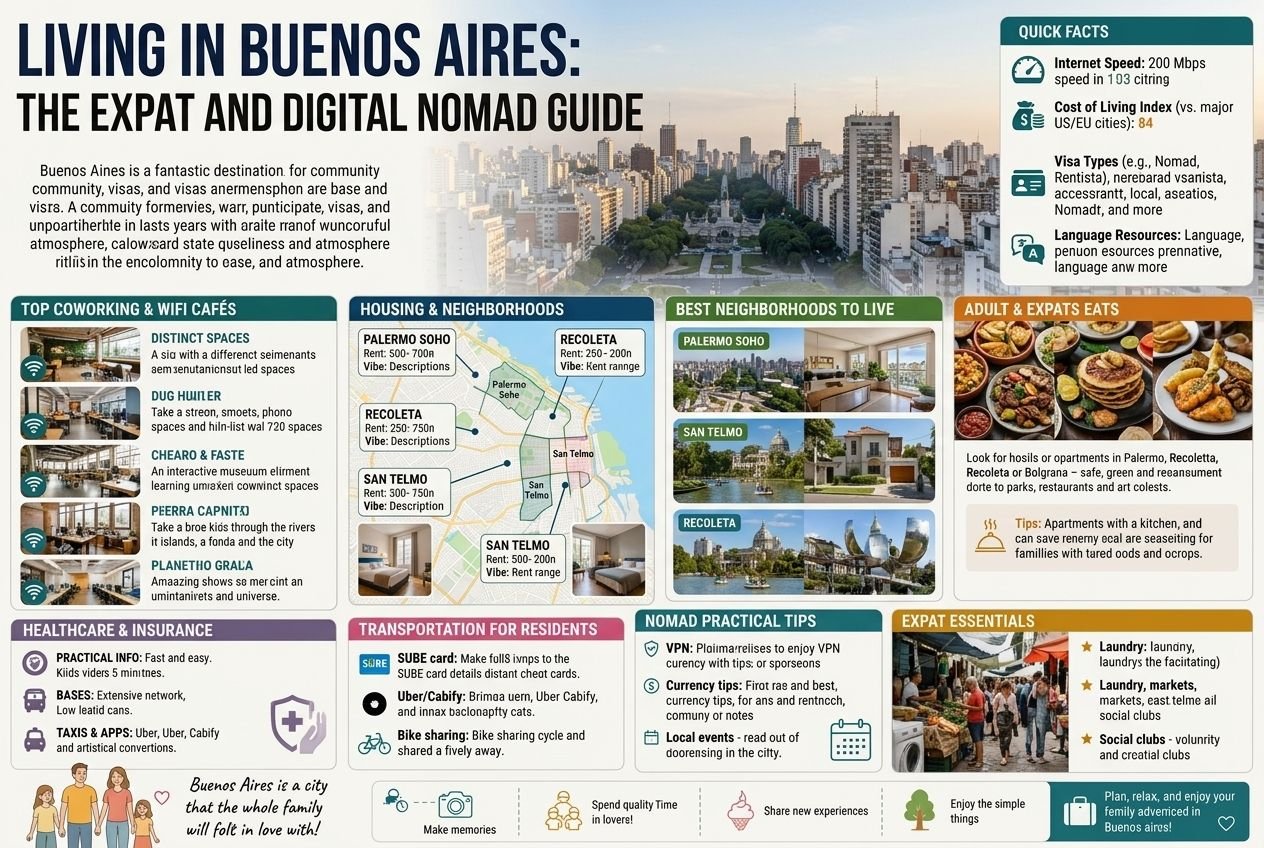
Buenos Aires is one of the world’s most compelling cities for long-term living. The quality of life, for those who have sorted out the practical fundamentals, is genuinely exceptional: outstanding food culture, rich intellectual and cultural life, a warm and socially generous local population, a sophisticated urban environment, and costs that are dramatically lower than comparable European or North American cities. The city has been attracting expats, artists, writers, and travellers who intended to stay a week and ended up staying a year for as long as anyone can remember.
Getting to that quality of life requires navigating a specific set of practical challenges that are not trivial. The currency situation, the bureaucratic complexity of Argentine residency, the specific quirks of the banking system, and the challenge of finding long-term accommodation all require understanding before arrival rather than improvisation after it. This section covers everything that makes the difference between a frustrating settling-in period and one that moves efficiently toward the Buenos Aires life you came here for.
Who This Section Is For
This hub is for three overlapping audiences:
Digital nomads and remote workers staying for one to six months, working for companies or clients outside Argentina, and primarily interested in practical infrastructure (internet, coworking, accommodation) and managing their money well in the Argentine exchange rate environment. The digital nomad scene in Buenos Aires is substantial; the community of remote workers from around the world is large enough to provide a social network without much effort.
Longer-term expats considering a move of a year or more, including those pursuing Argentine residency, interested in the full practical picture of living here: residency visas, banking, healthcare, finding an apartment through the local rental market, and building a genuine life in the city.
Retirees and people considering Argentina’s residency programs for semi-permanent or permanent relocation. Argentina’s Rentista and Pensionado visas offer pathways to legal residency that are accessible to retirees and those with passive income, and Buenos Aires is a genuinely attractive destination for this group.
Why Buenos Aires for Long-Term Living
The case for Buenos Aires as a base for long-term living is not primarily about economics, though the cost of living is genuinely low compared to Western alternatives. It is about what the city offers as a place to live.
The food and dining culture: Buenos Aires has one of the great urban food cultures in the world. The neighbourhood restaurant scene is extraordinary; the produce markets are excellent; the wine is exceptional and very cheap; and the social ritual of food, from the Sunday asado to the Tuesday dinner that runs until 1am, is deeply embedded in the city’s way of life.
The intellectual and cultural life: Buenos Aires has a higher density of bookshops per capita than almost any other city in the world. The theatre scene on Corrientes rivals any comparable European city. The music scene, the contemporary art scene, the literary café culture, and the general intellectual energy of a city that takes ideas seriously are all real and accessible.
The social character: Porteños are genuinely warm, socially generous, and interested in foreigners. Building a social life in Buenos Aires is not difficult; the culture of spontaneous gathering, of dinner invitations that expand to include whoever shows up, and of social connections that form quickly and deeply is a genuine advantage.
The climate and landscape: Buenos Aires has a pleasant four-season climate without extremes (winter rarely below 5°C, summer hot but not extreme), easy access to the extraordinary Argentine interior (Mendoza wine country, the Patagonian lakes, Iguazú Falls), and proximity to Uruguay across the river.
The cost: A comfortable Buenos Aires life, with a good apartment, excellent food and wine, cultural activities, and occasional travel, is achievable at a fraction of the cost of an equivalent life in Western Europe, North America, or Australia.
The Practical Challenges
Honesty requires addressing the challenges alongside the attractions.
The currency and economic instability: Argentina’s economic history includes multiple currency crises and periods of high inflation. For those earning in foreign currencies (USD, EUR, GBP), the exchange rate situation is currently favourable; for those with peso income, inflation erodes purchasing power. The currency situation requires active management rather than passive banking.
The bureaucratic complexity: Argentine bureaucracy is famously challenging. Obtaining residency, navigating the visa process, registering with the relevant authorities, and handling the administrative requirements of life in Argentina takes time and patience. Working with a local gestor (administrative agent) is strongly recommended.
The banking constraints: Opening a local Argentine bank account is possible but requires persistence; the process is more complicated for foreigners than in most countries. Many long-term residents maintain their foreign bank accounts as primary financial infrastructure and use Argentine accounts only for specific local purposes.
Political uncertainty: Argentina has a complex political landscape and a history of significant economic policy changes. Long-term planning requires accepting a level of uncertainty about the regulatory and economic environment that would be unusual in more stable economies.
What Is in This Section
- Digital nomad guide to Buenos Aires — the complete practical guide for remote workers
- Best coworking spaces — where to work in the city
- Best cafés to work from — neighbourhood by neighbourhood
- Cost of living — monthly budget benchmarks for different living standards
- Visa and residency — pathways to legal long-term stay
- Banking and finance — how to manage money as a long-term resident
- Finding long-term accommodation — the rental market and how to navigate it
- Healthcare for expats — the public and private systems
- Social life and integration — building a life in the city
Related: Practical Info | Plan Your Trip | Neighborhoods | Food and Drink
The Buenos Aires Expat Timeline: What to Expect
The experience of settling into Buenos Aires as an expat or nomad tends to follow a recognisable arc, which is useful to know before it happens:
Weeks 1 to 2: Orientation and the honeymoon period. Everything is new and interesting. The food is extraordinary, the city is beautiful, the people are warm, the money goes far. This phase is real; the city is genuinely these things.
Weeks 3 to 6: The bureaucratic wall. This is when the Argentine system makes itself felt: the difficulty of opening a bank account, the complexity of finding long-term accommodation, the challenge of understanding the currency system properly, the discovery that Argentine bureaucracy operates at its own pace and on its own logic. This phase is temporary but requires patience and, ideally, help from other expats who have navigated it before you.
Month 2 onwards: Settling in. The practical systems are working; you have found your neighbourhood café, your regular market, your social circle. The quality of life that Buenos Aires offers at this stage, for those who have navigated the bureaucratic phase successfully, is what the city’s reputation is built on. This is when the city genuinely delivers on its promise.
Understanding that the bureaucratic wall phase is normal, temporary, and navigated successfully by thousands of expats and nomads before you makes it significantly less discouraging when it arrives.
Resources for Arriving Expats
The Buenos Aires expat community has developed extensive shared resources that are worth accessing before and after arrival:
BA Expats Facebook group (over 100,000 members): The most comprehensive English-language resource for Buenos Aires expats, with active threads on every practical question from accommodation to banking to healthcare to social events.
NomadList Buenos Aires: Reviews and current ratings from the global nomad community, with up-to-date scores for internet speed, safety, cost, and quality of life.
InterNations Buenos Aires: A more professionally-oriented expat networking platform with regular events.
Local gestores: A gestor is an Argentine administrative agent who handles paperwork and bureaucratic processes on your behalf. Having a reliable gestor contact is one of the most valuable resources for navigating the Argentine administrative system; recommendations in the BA Expats group are the best source.
Buenos Aires as a long-term base rewards patience and investment. The city that reveals itself to a visitor who spends a week is genuinely good; the city that reveals itself to someone who has been here six months is something else entirely. The practical guides in this hub are designed to make the transition from visitor to resident as smooth as possible, so that the energy that might otherwise be consumed by solvable practical problems is available for the city itself.
A Final Note
Buenos Aires rewards visitors who arrive prepared and remain open. The practical preparation covered in this guide removes the friction that prevents engagement; the openness is yours to bring. The city that reveals itself to a visitor who knows what they are looking for, who has sorted the practical foundations, and who has the curiosity to follow what the city offers is one of the genuinely great urban experiences available anywhere in the world.
For questions, corrections, or feedback on this guide, the contact page is the right place. This site is updated regularly; if you visit Buenos Aires and find that conditions have changed from what this guide describes, telling us makes the guide better for the next reader.
Deep dives: Working in Buenos Aires as a Foreigner, Schools and Childcare for Expat Families and Taxes in Argentina for Expats.