
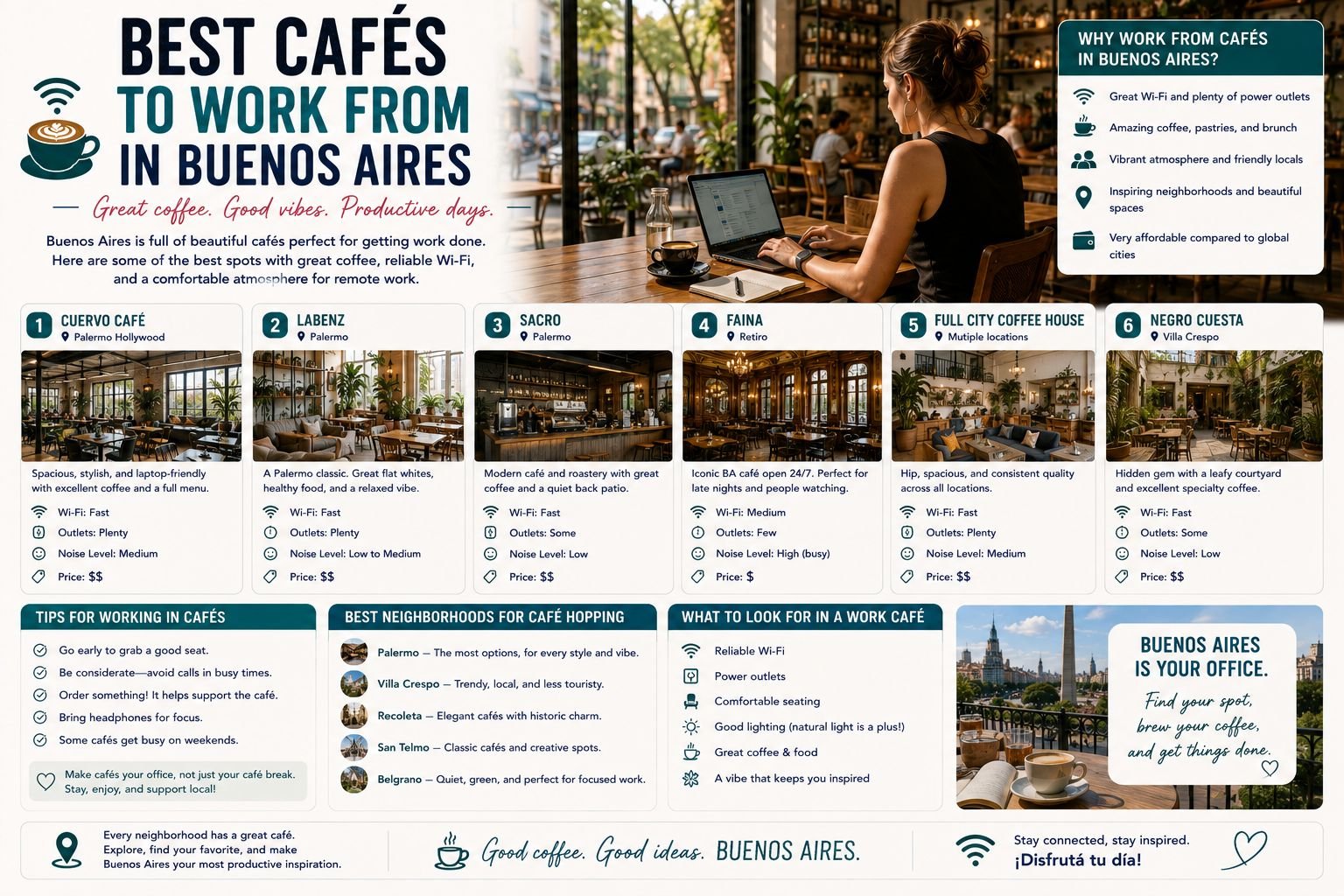
One of Buenos Aires’ genuine advantages for remote workers is its café culture. The city has a dense network of independent cafés where extended working sessions are socially acceptable, the coffee is good, the Wi-Fi is generally reliable, and the daily cost of a working session is a fraction of a coworking space. This guide identifies the best working cafés neighbourhood by neighbourhood, with specific information on internet reliability, power sockets, and the practical considerations that make a café functional for work rather than merely pleasant.
What Makes a Good Working Café
Wi-Fi reliability: The critical factor. A café with beautiful interiors and bad internet is useless for remote work. The cafés in this guide have been selected based on consistently reliable Wi-Fi; this is worth verifying on your first visit, as infrastructure can change.
Power sockets: Extended working sessions require laptop charging. Good working cafés have power sockets at most tables or at designated working areas; others have few or none. This is noted for each recommendation.
Noise level: Different work requires different environments. Some cafés are quiet enough for focused writing; others are lively enough that they provide an energising background hum but make video calls difficult. This guide notes the noise character of each recommendation.
Table space: Working on a laptop requires more table space than eating a pastry. Cafés with small tables or very dense seating are impractical for laptop work. The recommendations below have adequate table space for a laptop and a cup.
Duration tolerance: Some cafés are effectively unlimited in how long you can stay, provided you order periodically; others have implicit pressure to turn tables. All recommendations in this guide are comfortable with extended working sessions.
Best Working Cafés by Neighbourhood
Palermo
Felicidad del Norte (Av. Corrientes area, Palermo side): A favourite of the Palermo nomad community, with fast and reliable Wi-Fi, generous power socket provision, good natural light, and coffee that justifies the visit on its own terms. The acoustics are good for focus; the vibe is creative and productive without being corporate.
Lattente (Armenia 1579, Palermo Soho): A specialty coffee shop with excellent beans and a serious approach to extraction. Multiple power sockets along the window bar and one of the fastest café Wi-Fi connections in Palermo. Best for solo working; small tables.
Raw Café (various Palermo locations): A small chain of cafés with a health-food orientation, reliable internet, and good laptop-working infrastructure. The Soho location is the most convenient. Popular with Palermo’s creative and wellness community.
Scandinavia (Gorriti, Palermo): A Scandinavian-influenced café with a reputation for excellent Wi-Fi, good natural light, and an atmosphere that balances social and working modes well. The neighbourhood location means less tourist traffic than the main arteries.
Villa Crespo
Origen Café (Corrientes area, Villa Crespo): One of the best specialty coffee shops in the city, with excellent beans and a genuinely productive working environment. Reliable Wi-Fi, power sockets at most seats, and a neighbourhood clientele that includes many regular workers.
El Preferido de Palermo (technically Palermo/Villa Crespo border): The converted almacén format means generous table space and a mix of workers and social customers. Good internet, generous hours, and the best natural lighting in the afternoon.
San Telmo
Café El Federal (Carlos Calvo 599, San Telmo): One of the oldest cafés in Buenos Aires, the Federal is primarily a historic experience rather than a working café; the internet is variable. Worth visiting for the atmosphere; not recommended as a primary working location.
Bourbon Coffee (near Av. Independencia, San Telmo): A specialty coffee shop in the San Telmo-Constitución border area that has become a working café hub for the neighbourhood’s growing creative population. Good Wi-Fi, power sockets, and a genuinely productive atmosphere.
Recoleta
Nicolás Avellaneda Café (near MALBA, Recoleta/Palermo border): A well-lit café in the cultural institution corridor between Recoleta and Palermo that attracts a mix of museum visitors and working regulars. Reliable internet; power sockets available at the working-oriented seating areas.
La Farmacia (Av. Santa Fe, Recoleta): A café in a converted pharmacy space with unusual architecture and a working-friendly layout. Popular with Recoleta’s professional community for midday working sessions.
The Buenos Aires Café Working Protocol
The coffee ordering rhythm: Order when you arrive and reorder every 60 to 90 minutes. A cortado and a medialuna is the standard opening order; a second coffee later maintains the relationship with the establishment. This is the unspoken understanding in working cafés and respecting it keeps the option open for everyone.
Headphones: Use headphones for any audio. Video calls with audio in a shared café space are not acceptable; headphones for music or podcasts are fine.
Wi-Fi passwords: Most cafés display the password on a sign or card, or provide it with your order. If neither, ask the waiter for the contraseña del WiFi.
The best hours for café working: Buenos Aires cafés have a midday peak (1pm to 3pm for lunch service) when working becomes harder as tables fill up. Early mornings (8am to noon) and mid-afternoon (3pm to 6pm) are the most productive working windows. Late afternoon into the evening is also viable but the social character of the café changes as the working day ends.
Mobile Data as Backup
Always have a working Argentine SIM card with data as backup. When a café’s Wi-Fi is temporarily down (not unusual) or when you move between locations, mobile data tethering from your phone provides seamless backup connectivity. The [SIM cards guide](/practical-info/sim-cards/) covers which operators and plans work best.
Related: Digital Nomad Guide | Coworking Spaces | Cost of Living | Palermo Guide
The Buenos Aires Café Working Culture: A Deeper Look
The café working culture in Buenos Aires has specific characteristics that make it unusually hospitable for remote workers compared to many other cities.
The historical context: Buenos Aires’ café culture is rooted in the Central European tradition brought by the Italian and Spanish immigrants who gave the city much of its character. The café as a working and intellectual space, not merely a social one, has been part of Buenos Aires life since the late 19th century. Writers, journalists, chess players, and thinkers working from café tables is a traditional Buenos Aires image, not an imported Silicon Valley affectation. This means the culture of working in cafés is genuinely embedded rather than merely tolerated.
The cortado rhythm: The standard Buenos Aires café order for a working session is a cortado (espresso with a small amount of warm milk) plus a medialuna. This combination costs a few dollars, takes 20 minutes to consume, and provides the caffeine hit required for a morning of productive work. Reordering every 60 to 90 minutes (a second cortado, then perhaps a juice, then lunch) maintains the relationship with the establishment at an appropriate level for an extended stay.
The afternoon transition: Buenos Aires cafés change character through the day. Mornings are for working regulars; midday brings the lunch rush; mid-afternoon is quiet again and excellent for focused work; early evening brings the after-work social crowd. The working sweet spots are 8am to noon and 3pm to 6pm.
Discovering New Working Cafés
The best working cafés in any neighbourhood are found by observation: note which cafés have customers working on laptops, how long they seem to have been there, and whether the staff appear comfortable with the arrangement. A café where three or four people are working on laptops with a cup each at 10am on a Wednesday is almost certainly good for working; a café full of animated conversation and no laptops is social rather than working culture.
Asking other nomads in your coworking space or the BA Expats Facebook group for current recommendations in specific neighbourhoods produces more current and specific results than any published guide; café quality and working-friendliness change with staff turnover and ownership changes.
The café working life in Buenos Aires is one of the city’s genuine pleasures for remote workers. The combination of excellent coffee, the kind of ambient social energy that makes a working day feel less isolated than a home office, neighbourhood character that changes your environment throughout the week, and the affordability that makes a daily café budget genuinely feasible: these make café working here a lifestyle component rather than just a practical option. The specific cafés in this guide are starting points; discovering your own preferred working spaces is part of settling into the city.
A Final Note
Buenos Aires rewards visitors who arrive prepared and remain open. The practical preparation covered in this guide removes the friction that prevents engagement; the openness is yours to bring. The city that reveals itself to a visitor who knows what they are looking for, who has sorted the practical foundations, and who has the curiosity to follow what the city offers is one of the genuinely great urban experiences available anywhere in the world.
For questions, corrections, or feedback on this guide, the contact page is the right place. This site is updated regularly; if you visit Buenos Aires and find that conditions have changed from what this guide describes, telling us makes the guide better for the next reader.