
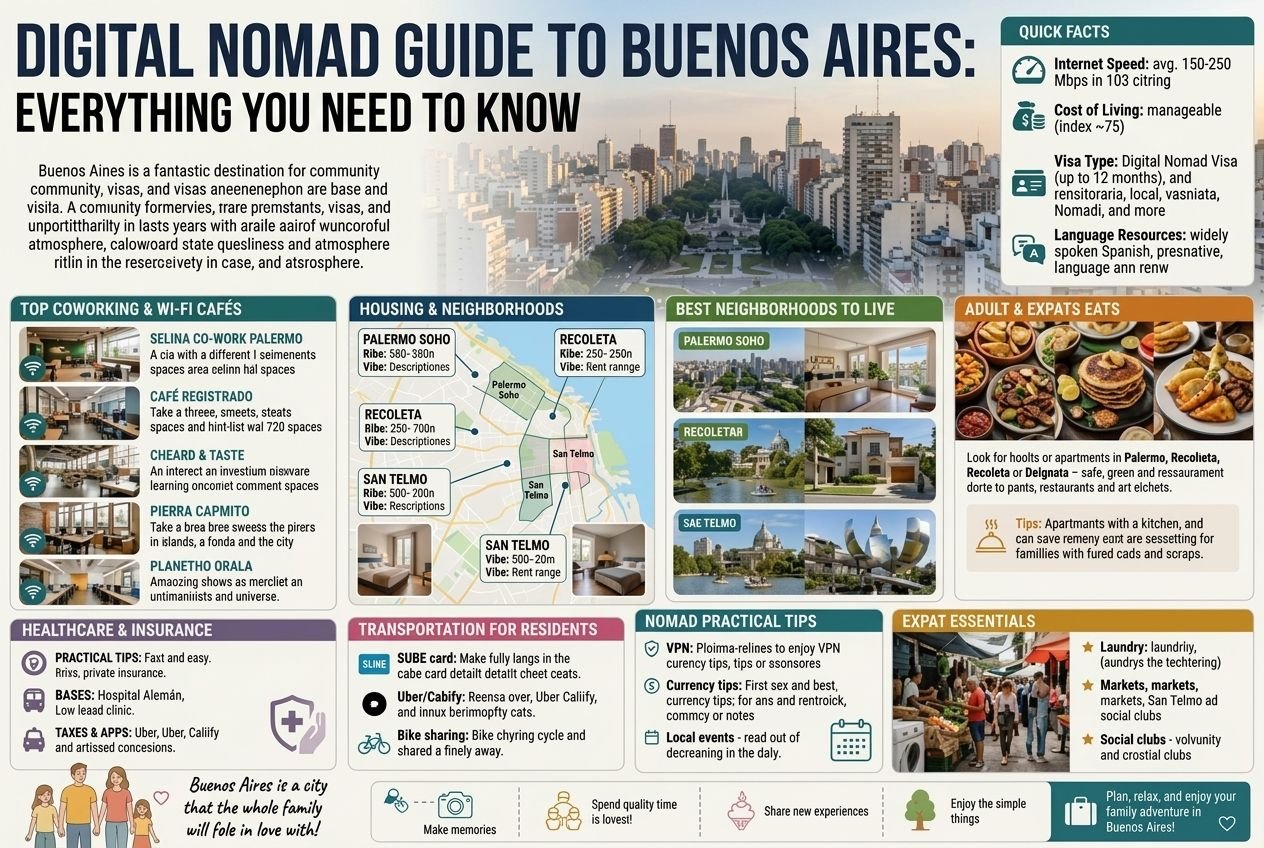
Buenos Aires is one of the best cities in the world for digital nomads. The combination of very low cost of living (for those earning in foreign currencies), excellent quality of life, large and established nomad and expat community, good coworking infrastructure, and a city that is genuinely interesting to live in rather than merely tolerable while you work, makes it a top-tier choice for remote workers who want an urban base in Latin America.
This guide covers the complete practical picture: internet reliability, coworking options, accommodation, managing money, visa situation, and how to navigate the specific quirks of Buenos Aires life as a remote worker.
Internet Reliability: The Most Important Practical Question
Buenos Aires has generally good internet infrastructure in the tourist and expat areas, but it is not uniformly fast or reliable. Understanding the landscape before you arrive helps set appropriate expectations and identify the right working environments.
Residential and accommodation internet: The quality of internet in apartments and hotels varies significantly. Older buildings with older wiring can have slower and less stable connections; newer buildings and purpose-equipped nomad accommodation are more reliable. When booking accommodation for work purposes, specifically asking about internet speed (requesting a Speedtest screenshot from the host is entirely reasonable) is worthwhile. A connection of at least 20 Mbps download and 5 Mbps upload is sufficient for most remote work; video call-heavy work benefits from 50 Mbps or more.
Neighbourhood variation: Palermo, Belgrano, and the newer parts of the city generally have better internet infrastructure than the older historic districts. San Telmo and La Boca have more variable connectivity. The digital nomad concentration in Palermo partly reflects this practical reality.
Mobile data as backup: Having a local SIM card with a good data plan (Claro and Personal are the most reliable) provides backup connectivity when fixed internet is problematic. For solo work on a laptop, mobile data tethering is a viable primary connection for less bandwidth-intensive work.
The Visa Situation for Digital Nomads
Argentina does not have a specific “digital nomad visa” as of 2025. The options for remote workers are:
90-day tourist entry: Most Western passport holders can enter Argentina as tourists for 90 days without a visa. This is sufficient for a standard nomad stay. The 90-day stay can typically be extended by crossing a border (the ferry to Uruguay and back is the most popular method) or by applying for a prórroga (90-day extension) at the migration office in Buenos Aires.
Long-term residency visas: For those intending to stay longer than 180 days per year, Argentina’s Rentista visa (for those with passive income from foreign sources of at least USD 1,500 per month), the Pensionado visa (for retirees with pension income), or the Trabajador Independiente (independent worker) visa category are the primary options. These are covered in detail in the visa and residency guide.
The practical reality for most nomads: Most digital nomads in Buenos Aires operate on a rolling tourist visa basis, doing a border run to Uruguay every 90 days. This is widely practiced and generally not questioned by Argentine immigration for stays of up to a year; attempting it for several years in a row is more likely to attract scrutiny.
The Money Situation: Your Biggest Practical Advantage
For digital nomads earning in USD, EUR, or GBP, the Argentine exchange rate situation is the most significant practical advantage of living here. The gap between the official exchange rate and the legal tourist or MEP rate means your foreign income goes significantly further than it would if exchanged at a standard bank rate.
A monthly salary of USD 3,000 that exchanges at the official rate provides a comfortable Buenos Aires living standard. The same salary at the MEP or tourist rate can feel considerably more comfortable, potentially covering rent, excellent food and wine, cultural activities, and savings.
The money guide covers the mechanics in detail. For nomads planning a multi-month stay, understanding and actively managing the exchange process is one of the highest-return practical investments you can make.
Monthly Cost Benchmarks for Digital Nomads
All figures at tourist/MEP rate. See the cost of living guide for a full breakdown.
Budget comfortable (USD 1,200 to 1,800/month): A private room in a shared apartment in Palermo or Villa Crespo, eating out 5 to 7 times per week at local restaurants, a coworking desk 3 days per week, occasional activities and nights out.
Standard comfortable (USD 1,800 to 2,800/month): Your own studio or one-bedroom apartment in Palermo, eating out most evenings, a full-time coworking membership or very good café working rotation, regular cultural activities, occasional weekend trips.
Well-off (USD 2,800 to 4,500/month): A good two-bedroom apartment in a desirable neighbourhood, consistently high-quality restaurant dining, premium coworking, travel within Argentina every few weeks.
These figures make Buenos Aires among the best value major cities in the world for remote workers with foreign income. Equivalent lifestyle costs in Berlin, London, or New York would be three to five times higher.
Coworking and Café Working
Buenos Aires has a mature coworking scene with spaces at every price point and style. The coworking spaces guide covers the full range with specific recommendations. The cafés to work from guide covers the neighbourhood-by-neighbourhood café working landscape, which is equally important for nomads who want variety and a more immersive city experience alongside structured coworking.
The general working culture in Buenos Aires cafés is comfortable with people working on laptops; unlike some cities, there is no strong social norm against extended working sessions in cafés. The best working cafés have reliable Wi-Fi, sufficient power sockets, good coffee, and enough table space to be productive.
Finding Accommodation for a Nomad Stay
For stays of one to three months, the most practical options are:
Furnished apartments on Airbnb or similar: Palermo, Villa Crespo, and Recoleta have good supplies of furnished apartments available for monthly rental. Monthly stays on Airbnb are typically significantly cheaper per night than weekly rates; negotiating directly with hosts through the platform for a monthly discount is standard practice.
Nomad-specific accommodation: Several Buenos Aires properties specifically cater to digital nomads with reliable high-speed internet, communal working areas, and community programming. These typically sit between hotels and standard Airbnb in price, with the advantage of infrastructure specifically designed for remote work.
Coliving spaces: Buenos Aires has several coliving operations providing private rooms with shared common areas, coworking space, and programmed community activities. These are more expensive than standard apartment rentals but provide instant community, which is valuable for nomads arriving without a social network.
The finding accommodation guide covers long-term rental options for those staying six months or more.
The Buenos Aires Nomad Community
Buenos Aires has a large, established, and active nomad and expat community that is not difficult to access. Regular meetups, coworking events, language exchange sessions, and informal social gatherings mean that arriving without a single contact and building a meaningful social network within two weeks is entirely realistic.
The NomadList community has Buenos Aires as a consistently well-rated destination; there are multiple active Facebook groups for expats and nomads (BA Expats, Digital Nomads Buenos Aires, and similar); and the coworking spaces themselves function as community hubs.
Specific Practical Tips for Arriving Nomads
Get a SUBE card immediately: The public transport card is essential for navigating the city cheaply. Available at kiosks throughout the city and at both airports.
Get a local SIM card at the airport: Connectivity from the moment you leave the airport is valuable. Buy a Claro or Personal SIM at the airport kiosk; data plans are cheap.
Set up your exchange rate strategy early: Don’t wait until your funds are low to figure out the money situation. Understand the money guide before you need it.
Join nomad community groups before arrival: Facebook groups for Buenos Aires expats and nomads are active and useful sources of current practical information, accommodation leads, and social connections.
Related: Coworking Spaces | Cafés to Work From | Cost of Living | Visa and Residency
Specific Challenges for Digital Nomads in Buenos Aires
A few specific challenges worth knowing about before arriving:
Power outages: Buenos Aires experiences occasional power outages, particularly during summer peak demand periods (January and February when air conditioning load is at maximum). These are typically brief (minutes to hours) but can disrupt work. Good coworking spaces have backup power; apartments do not always. Having your laptop battery maintained near full and mobile data as a backup connection means power outages are inconveniences rather than productivity killers.
Banking access: Argentine ATMs have transaction limits that can be lower than you expect; plan for multiple visits or use cambio exchange services when you need larger amounts of pesos. The banking guide covers the current mechanics.
Tax considerations: Working remotely from Argentina raises tax questions that are your responsibility to understand. Argentina does not tax the foreign income of temporary visitors; your home country tax obligations depend on your specific situation and tax residency status. This is a legitimate consideration that is genuinely jurisdiction-specific; consulting a tax professional who understands both your home country rules and the Argentine rules is advisable for stays of more than a few months.
Health insurance timing: If you are arriving without existing travel insurance that covers Argentina, securing coverage before arrival is essential; some health conditions can develop during a Buenos Aires stay that make post-arrival insurance applications complicated.
The Buenos Aires Nomad Community: How to Access It
The Buenos Aires nomad community is large, active, and generally welcoming. Specific access points:
Nomad Cabin Buenos Aires: Regular meetups for digital nomads and remote workers in the city, typically held in coworking venues or larger cafés.
Couchsurfing Buenos Aires meetups: Despite the name, Couchsurfing’s Buenos Aires meetups function as general social events for travellers and nomads rather than specifically for Couchsurfing users; they are an easy social onramp for newcomers.
Language exchange events: Typically held weekly in bars and cafés in Palermo and San Telmo, these mix local Porteños wanting English practice with international visitors wanting Spanish practice. They are an unusually efficient way to meet both locals and other internationals simultaneously.
Deep dives for remote workers: Getting Paid and Moving Money in Argentina, Taxes in Argentina for Expats and Working in Buenos Aires as a Foreigner.