
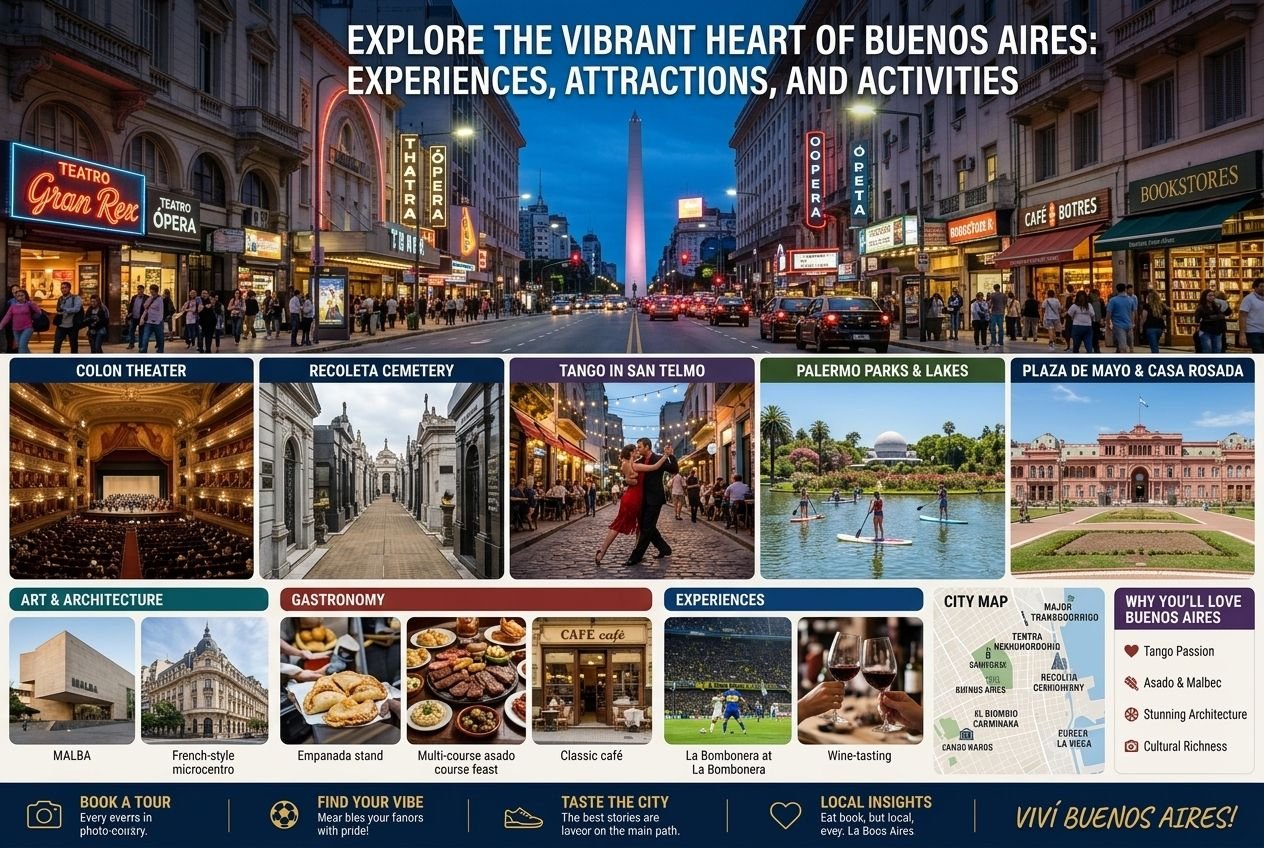
Buenos Aires is one of the most experience-rich cities in South America. The density of things worth doing, from world-class tango to extraordinary free museums to day trips across international borders, makes it difficult to leave feeling like you missed the essential. The challenge for a first-time visitor is not finding things to do but understanding which experiences are genuinely central to the Buenos Aires character and which are peripheral.
This guide organises the main categories of Buenos Aires experience and links to detailed guides for each.
Tango: The Central Cultural Experience
Tango is the music, dance, and culture that Buenos Aires created and that defines its cultural identity more than anything else. It is not merely a tourist attraction; it is a living culture that Porteños practice in milongas across the city every week, that appears on street corners and in plazas, and that carries the history of the immigrant working class who invented it in the conventillos of La Boca and San Telmo in the late 19th century.
For visitors, tango presents itself in two primary forms:
Tango shows: Professional theatrical performances combining dinner with the most spectacular dancing you will see, performed by professional couples who have trained for years. These are made for audiences and are genuinely impressive; they are also made for audiences in the sense that they are not how Porteños actually experience tango. The tango shows guide covers the full range of options from intimate small venues to large theatrical productions.
Milongas: The social dance venues where Buenos Aires tango actually lives. A milonga is a dance event where anyone can attend; most have tables around a dance floor, a dress code, and specific social codes (the cabeceo, a subtle nod used to invite a partner to dance, is the most famous). Visitors are welcome at most milongas; some specifically welcome beginners. The atmosphere at a milonga at midnight, with an orchestra and a room full of dancers of every age, is unlike anything else in Buenos Aires. The milongas guide covers which venues are most accessible to first-timers.
Free and Low-Cost Experiences
Buenos Aires is exceptionally well-supplied with free and very cheap experiences, particularly for culture and urban exploration.
Recoleta Cemetery: Free, extraordinary, an hour or more of exploration.
Museo Nacional de Bellas Artes: Free, one of the better art collections in South America.
San Telmo Sunday market: Free, one of the best market experiences in South America.
Palermo Parks: Free, extensive, with rose gardens, Japanese garden, cycling paths, and the city’s best green space.
The Reserva Ecológica Costanera Sur: Free, an extraordinary nature reserve in the middle of the city.
The streets themselves: Buenos Aires has extraordinary architecture, from the French belle-époque mansions of Recoleta to the colourful corrugated metal of La Boca to the art deco theatre facades along Corrientes. Walking the city is itself an experience of considerable quality.
Day Trips
Buenos Aires is within easy reach of some genuinely excellent day trip destinations.
Colonia del Sacramento, Uruguay: A 1 to 3 hour ferry ride brings you to one of the best-preserved colonial towns in South America, a UNESCO World Heritage Site with cobblestone streets and Portuguese fortifications. The day trip to Colonia is one of the most recommended activities in Buenos Aires; it requires a full day but delivers an experience that is completely different from the city. The Colonia day trip guide covers the logistics.
Tigre Delta: A 35-minute suburban train ride north of Buenos Aires brings you to the Tigre river delta, a network of islands and waterways where the old delta lifestyle of houseboats and rowing clubs continues. A different pace, a different landscape, easily done as a half-day.
Football: The Other Buenos Aires Religion
Football occupies a place in Buenos Aires social life that is difficult to understand without witnessing it. Boca Juniors and River Plate, the two great Buenos Aires clubs, have a rivalry (the Superclásico) that is considered one of the most intense in world football. Attending a match at La Bombonera or Monumental is one of the most viscerally intense experiences the city offers.
The practical challenge: tickets for popular matches, particularly Boca vs River, are difficult for independent tourists to obtain. Most visitors who attend matches do so through organised tour packages that handle the ticketing and transport.
Attractions and Landmarks
Buenos Aires has a remarkable concentration of significant landmarks and attractions:
Plaza de Mayo and the Casa Rosada: The political centre of Argentina and one of the most historically significant public spaces in South America.
Recoleta Cemetery: An extraordinary above-ground cemetery of elaborate mausoleums and funerary sculpture, containing the grave of Eva Perón.
El Ateneo Grand Splendid: A bookshop in a former theatre, with the stage converted to a café and the stalls lined with bookshelves. One of the most beautiful commercial spaces in the world.
Palacio Barolo: A 1923 office building on Avenida de Mayo designed according to the architecture of Dante’s Divine Comedy, with guided tours that illuminate the extraordinary symbolism embedded in its design.
MALBA: The Museo de Arte Latinoamericano de Buenos Aires, the finest collection of Latin American art in the country.
Buenos Aires with Children
Buenos Aires is a surprisingly good destination for families. The child-friendly infrastructure is extensive; Porteños are very welcoming of children in restaurants and public spaces; and the city has specific attractions that work well with younger visitors. The Buenos Aires with kids guide covers the best family options.
Related: Neighborhoods | Food and Drink | Practical Info | Plan Your Trip
Seasonal and Special Experiences
Buenos Aires has several experiences that are specific to particular seasons and worth planning around:
October and November: The jacaranda bloom. Throughout the city, but most spectacularly in Palermo and Recoleta, the jacaranda trees (Jacaranda mimosifolia) cover the streets in purple blossom for approximately four to six weeks in late October and November. The light through jacaranda canopy on a clear Buenos Aires spring afternoon is one of the most beautiful urban views in South America.
August Tango Festival: Covered in detail in the milongas guide. The defining event of the Buenos Aires cultural calendar for tango, with two weeks of extraordinary performances, competitions, and milongas.
Summer asados: The Argentine asado season technically runs year-round, but summer brings the long days and warm evenings that are ideal for the proper outdoor asado experience. If you receive an invitation to a summer asado, accept unconditionally.
Winter milongas: The milonga scene actually has a particular intensity in winter; the cold evenings make the warm ballrooms feel even more appealing, and the winter milonga has a specific atmosphere of community against the cold that is different from the summer version.
Things to Do on a Budget
Buenos Aires is one of the world’s best cities for high-quality free and very cheap experiences.
All city museums are free or very cheap. The Subte and buses cost under USD 1 per journey. The Sunday market in San Telmo costs nothing to attend. The Palermo Parks are free and extraordinary. Watching tango street performers costs nothing (a tip is appropriate but the amount is discretionary). The neighbourhood streets, markets, and plazas of Buenos Aires are a constant source of entertainment, encounter, and discovery that require no booking, no ticket, and no plan.
A visitor who spends all their Buenos Aires activity time in the free category, eating at the cheapest local restaurants, and using public transport exclusively, can have an excellent experience of the city for approximately USD 25 to 40 per day excluding accommodation.
Buenos Aires has enough genuinely excellent things to do that the challenge is selection rather than discovery. This hub provides the framework for making good selections based on your specific interests, time, and priorities; the individual guides provide the detail to pursue each one effectively. The most important selection principle: prioritise the experiences that are specific to Buenos Aires over those that could be had in any major city. The tango milonga, the asado, the Sunday market, the Colonia ferry: these are the experiences that Buenos Aires does and nowhere else does in quite the same way.
A Final Note
Buenos Aires rewards visitors who arrive prepared and remain open. The practical preparation covered in this guide removes the friction that prevents engagement; the openness is yours to bring. The city that reveals itself to a visitor who knows what they are looking for, who has sorted the practical foundations, and who has the curiosity to follow what the city offers is one of the genuinely great urban experiences available anywhere in the world.
For questions, corrections, or feedback on this guide, the contact page is the right place. This site is updated regularly; if you visit Buenos Aires and find that conditions have changed from what this guide describes, telling us makes the guide better for the next reader.