
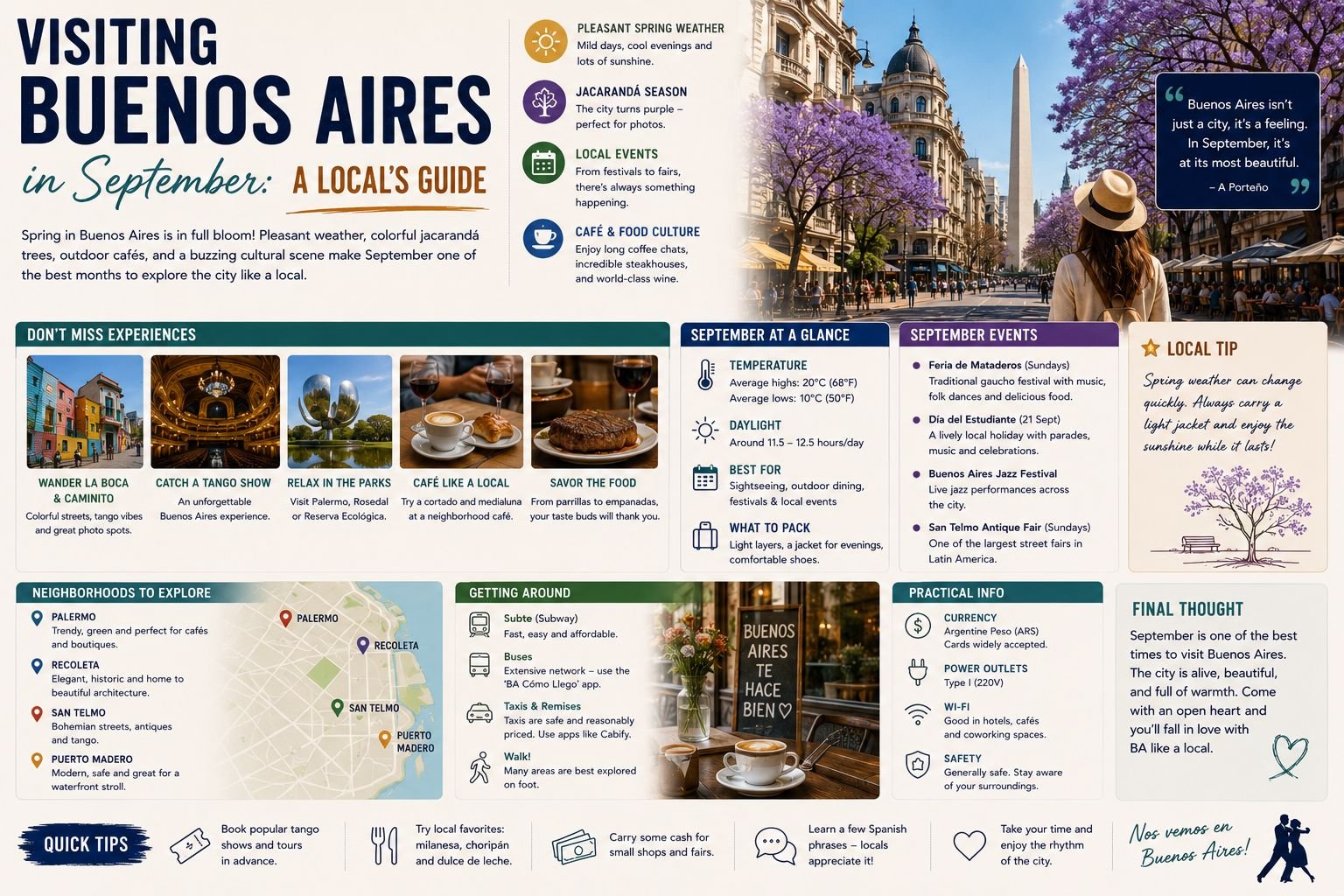
September is early spring in Buenos Aires, and it marks the genuine start of what many consider the city’s best stretch of weather: the transition out of winter into the mild, blooming months that carry through to November.
Weather in September
September brings noticeably warming temperatures, typically ranging from around 10°C (50°F) overnight lows to highs near 19°C (66°F), with more sunshine and less rain than the winter months. Early spring can still bring the occasional cool, blustery day, so layering remains sensible, but the overall trend through the month is toward increasingly comfortable, mild conditions.
Spring Arrives: Jardín Japonés Cherry Blossom Festival
September brings one of the city’s most photogenic seasonal events: the cherry blossom bloom at the Jardín Japonés (Japanese Garden) in Palermo, celebrated with a dedicated festival featuring traditional Japanese performances, tea ceremonies, and cultural workshops alongside the blossoms themselves. Exact bloom timing shifts year to year with the weather, typically falling within September, so check closer to your travel dates if this is a priority.
Events and Culture in September
Día del Inmigrante (Immigrant Day, September 4): A celebration of the waves of immigration, particularly Italian and Spanish, that shaped Buenos Aires’ culture, cuisine, and identity. Events include parades, cultural exhibitions, and food festivals across the city celebrating the various immigrant communities that built modern Argentina, offering visitors a genuine window into the layered cultural history behind the city’s European-inflected character.
Buenos Aires Fashion Week: Argentina’s major fashion event typically falls around this time of year, though exact dates shift; a strong draw for visitors with a specific interest in Latin American fashion and design.
What to Do in September
With the weather warming and the parks beginning to bloom, September is an excellent month to prioritise outdoor time: Bosques de Palermo, the Botanical Garden, and Barrancas de Belgrano all come alive with new growth this month, a welcome contrast to winter’s more subdued green spaces. Walking tours of Palermo, Recoleta, and San Telmo are all comfortable again without needing heavy winter layers, and outdoor café seating starts to make sense as a default rather than an exception.
A day trip to Tigre also suits this month particularly well, with the delta’s abundant greenery beginning its full spring growth and the boat trips through the channels genuinely pleasant in the mild weather.
Crowds and Pricing
September sits at the start of the shoulder season, generally offering good value and moderate crowds, past the deepest winter lull but well ahead of the busier late-spring months of October and November when the weather peaks for sightseeing.
Practical Tips for a September Visit
Layer for a month of genuine transition; a light jacket for cooler mornings and evenings alongside short sleeves for increasingly warm afternoons covers the range well. If the cherry blossoms are a specific priority, check bloom updates closer to your travel dates rather than relying on a fixed calendar date, since the timing shifts with the weather each year.
September for Visitors Chasing Ideal Weather Without October’s Crowds
Visitors who want the mild, comfortable weather that makes late spring so appealing in Buenos Aires, but without the rising crowds and pricing that October and November bring as word spreads about the jacaranda bloom and ideal conditions, often find September the sweet spot: weather that’s already noticeably milder and more pleasant than winter, combined with pricing and crowd levels still closer to the quieter shoulder season than the increasingly popular late-spring peak.
A Month of Genuine Renewal
There’s a specific, tangible quality to September in Buenos Aires that’s worth naming directly: after a winter that, while mild by many standards, still brings genuinely grey, quiet stretches to the city, September’s arrival brings a visible lift in public mood alongside the literal blooming of the parks and gardens. Outdoor seating fills up again, the parks see noticeably more use, and the city’s characteristic energy, somewhat dampened through the winter months, returns in a way that’s genuinely pleasant to experience as a visitor even without attending any specific event.
Sample September Days
September rewards getting outside as much as possible after winter’s more indoor-oriented months: a morning at the Jardín Japonés during the cherry blossom bloom, an afternoon walk through Barrancas de Belgrano or the Botanical Garden, and an evening that finally suits outdoor café seating again without needing a heavy coat. If Immigrant Day falls within your trip, seek out the associated food festivals specifically; sampling the range of immigrant-community cuisine on offer is one of the more genuinely educational and enjoyable ways to spend that day.
Frequently Asked Questions About Visiting in September
When exactly do the cherry blossoms bloom? Timing shifts year to year with the specific weather, typically falling somewhere within September; check closer to your travel dates for current bloom status rather than relying on a fixed date from a previous year.
Is September warm enough for outdoor dining? Increasingly so as the month progresses; early September can still bring cool, blustery days, while late September generally offers comfortable outdoor conditions for most of the day.
Is September less crowded than October? Generally yes, September sits earlier in the shoulder season with typically lower visitor numbers and better pricing than the increasingly popular October and November period.
Related: Best Time to Visit | August in Buenos Aires | October in Buenos Aires | Tigre Delta | Jardín Japonés

Hi, I’m Natalia, an Argentine writer born and raised in Buenos Aires, and I’ve been writing about this city for 9 years.
I cover Buenos Aires the way only a local can: the neighbourhoods that don’t make the highlight reels, the ferias worth getting up early for, the parrillas where the menu isn’t in English, and the safety picture by barrio — honest, not sanitized. I’ve taken 40+ solo trips across Argentina, Uruguay, Chile, Bolivia and Peru, and I write in both Spanish and English, which means the local forums, neighbourhood Facebook groups and municipal notices that never get translated are all fair game for me.
My writing covers two things I know from the inside: Buenos Aires as a destination — what to do, where to stay, how to navigate the city as a visitor — and Buenos Aires as a place to live. The expat life content comes from real experience: the paperwork that defeats everyone, the healthcare system that surprises you, the cost of living that changes faster than any guidebook can track, and the parts of porteño life that make it worth all of it.
If you’re visiting for a week or moving here for a year, I aim to be the honest friend who actually lives here — not the one who visited once and wrote a listicle.