
Tango was born in Buenos Aires, in the conventillos of San Telmo and La Boca in the late nineteenth century, and the city has never let go of it. For visitors, that history has been packaged into two very different experiences that often get confused: the tango show, a choreographed theatrical performance built for an audience, and the milonga, a social dance event where locals and visitors actually dance. This guide covers the shows. If you want the dance floor experience instead, see our separate milongas guide.
What a Tango Show Actually Is
A tango show is a staged performance, usually with dinner included, featuring professional dancers, a live orchestra, and often a singer. It is theatre, not a social dance floor, and it is designed to be spectacular: dramatic lighting, elaborate costumes, technically demanding choreography that goes well beyond what happens at a typical milonga. Purists sometimes dismiss shows as tourist theatre, and there is truth to that critique, but the best of them are genuinely excellent performances by serious dancers and musicians, and they remain the most accessible way for a visitor with no tango background to understand why the dance carries the cultural weight it does in Argentina.
Shows generally run in one of three formats: dinner and show together (the most common and most expensive), show only with a drink included, or show only with no drink. Dinner and show packages typically run three to four hours; show-only packages are shorter.
The Best Tango Shows in Buenos Aires
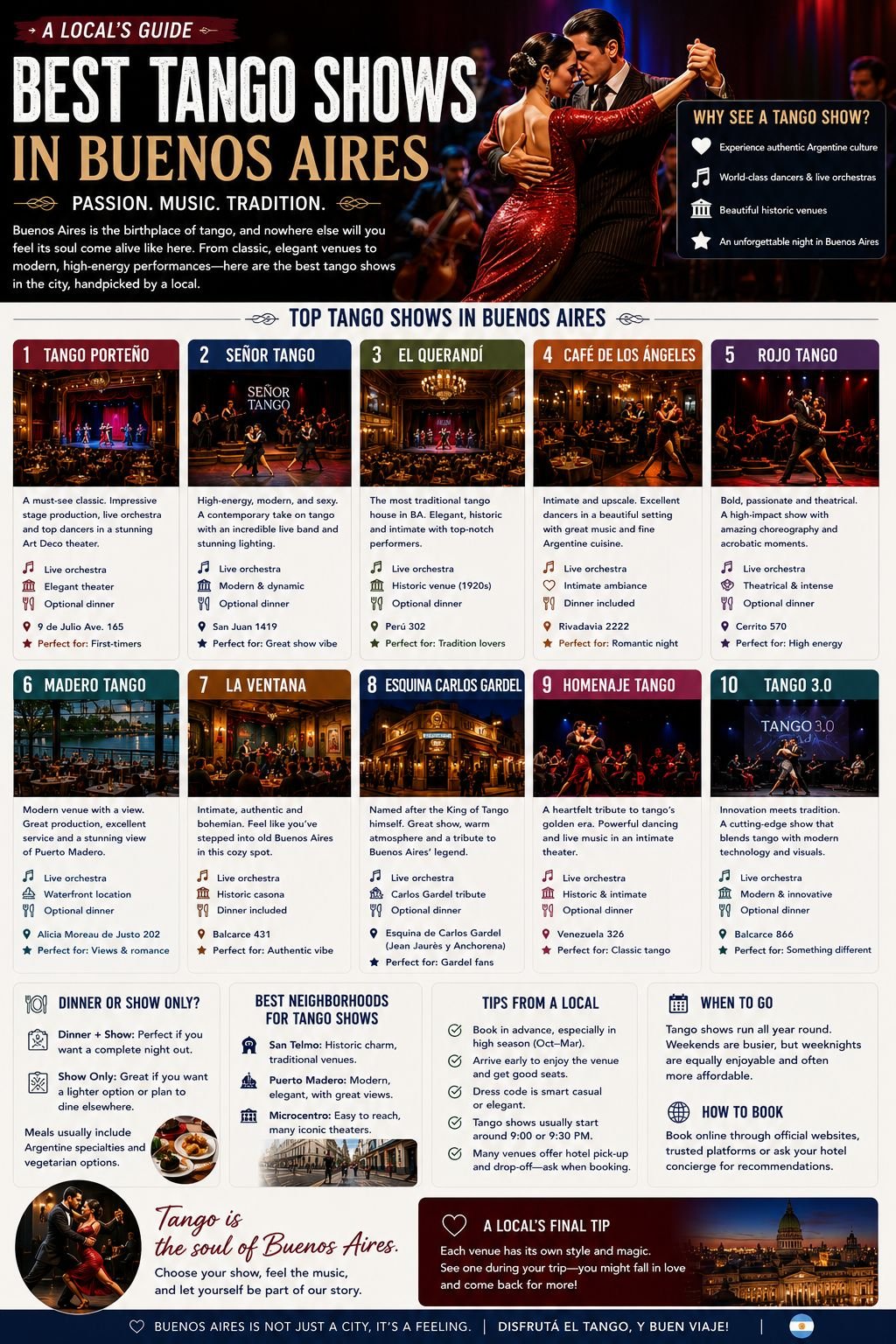
El Viejo Almacén: Housed in a former general store and hospital building dating to 1798 in San Telmo, this is one of the most atmospheric venues in the city. The intimacy of the room, the exposed brick, and the sense of history give it an edge over some of the larger, glossier productions elsewhere. The dancing is traditional and the orchestra strong.
Rojo Tango at Faena Hotel: The most expensive and most theatrical option in the city, staged inside the Faena Hotel’s opulent red-and-gold Cabaret room in Puerto Madero. This is tango as pure spectacle, with production values closer to a Las Vegas show than a neighbourhood milonga. Worth it for a special occasion; not the place for an authentic, understated experience.
Café de los Angelitos: A restored belle époque café near Avenida de Mayo with a long tango history (the building has connections to tango legend Carlos Gardel). The show here balances tradition with polish, and the venue itself, all marble and stained glass, is worth seeing regardless of the performance.
Piazzolla Tango: Located in a converted 1920s theatre, this show leans into the legacy of Astor Piazzolla, the composer who reinvented tango music in the mid-twentieth century. A good choice for visitors with a specific interest in tango’s musical evolution rather than just the dance.
Complejo Tango: A mid-range option in Almagro with a strong reputation for value. The show is polished without the price tag of the Puerto Madero venues, and the dinner is genuinely good rather than an afterthought to the performance.
La Ventana: One of San Telmo’s longest-running shows, in a converted colonial house on Balcarce. The performance covers a broader sweep of Argentine folklore alongside the tango, which makes it a reasonable choice for visitors who want a wider cultural sampler in one evening.
Booking and What to Expect
Book ahead, particularly for weekend dates and the Puerto Madero venues, which sell out regularly in high season (roughly November through March, plus the July winter break when Argentine tourists travel domestically). Most venues offer transfers from central hotels for an additional fee; this is worth it in San Telmo and Almagro, less necessary in Puerto Madero and Recoleta where taxis are easy to find.
Dress code is generally smart casual. The dinner-and-show packages are not, on the whole, where the best food in Buenos Aires happens; if you care more about the meal than the show, eat elsewhere beforehand and choose a show-only ticket.
Show or Milonga: Which Should You Choose?
If you want a spectacular, effortless evening with no participation required, choose a show. If you are even mildly curious about actually dancing, or want to see tango as the social practice it still is for thousands of ordinary porteños rather than as a piece of tourism infrastructure, go to a milonga instead, or do both on different nights. Many visitors do a show early in their trip as an introduction and a milonga later once they have a feel for the city.
Tango Beyond the Show
Buenos Aires’ relationship with tango extends well past the shows built for tourists. Free tango dancing happens most Sundays in Plaza Dorrego in San Telmo as part of the antiques market, and buskers dance in tourist-heavy pedestrian streets like Caminito in La Boca throughout the week, no ticket required. The city also runs a large annual tango festival and world championship, usually in August, which draws serious dancers from around the world and includes free outdoor performances alongside the ticketed competition rounds.
How Tango Shows Compare in Price
Tango shows in Buenos Aires span a wide price range, and the price generally tracks production value and venue prestige rather than dance quality alone, which is genuinely comparable across most of the established venues. Show-only tickets at the more modest venues sit at the accessible end; dinner-and-show packages at mid-range venues like Complejo Tango or La Ventana occupy the middle; and the Puerto Madero spectacles, particularly Rojo Tango at the Faena, sit at the premium end, reflecting both the production scale and the exclusivity of the setting.
None of this is a reliable guide to which show you will personally enjoy most: the intimate, lower-key venues in San Telmo often deliver a more emotionally affecting evening than the biggest productions, simply because the scale suits the art form’s roots as an intimate, close-quarters dance.
A Brief History of the Tango Show as an Institution
The commercial tango show as visitors know it today is a twentieth-century invention, distinct from tango’s origins as a social dance in the working-class conventillos of San Telmo and La Boca. As tango gained international fame through Paris in the 1910s and later through film and television, Buenos Aires developed a parallel tourist-facing industry built around theatrical, technically spectacular performances designed to showcase the dance’s dramatic potential to audiences with no intention of dancing themselves. Many of the city’s oldest surviving venues, including El Viejo Almacén, trace their history back through this mid-twentieth-century boom, giving the modern show circuit a genuine, if commercialised, historical lineage rather than being a purely contemporary tourist invention.
Related: Milongas | Things To Do | San Telmo | La Boca