
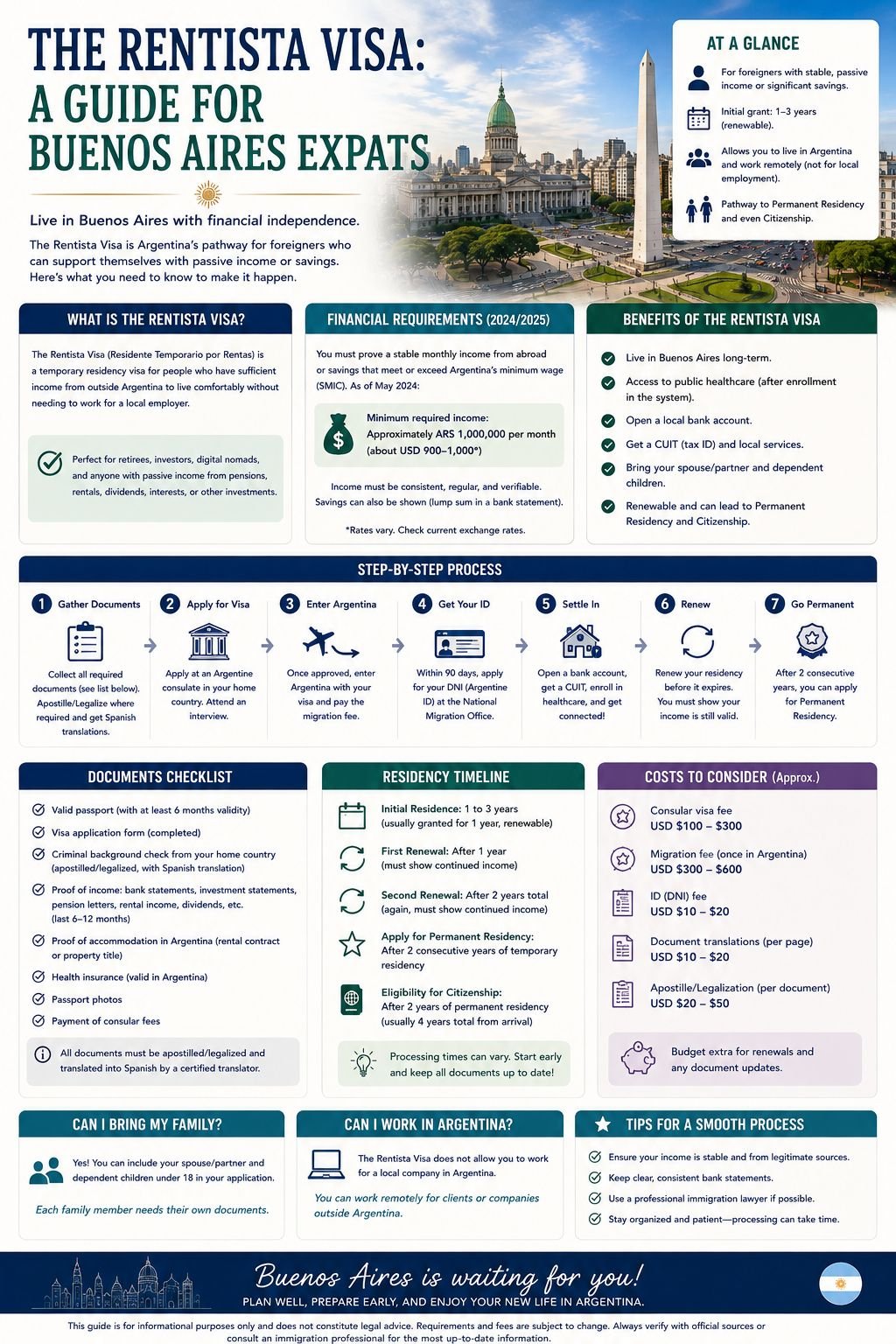
Of the various residency pathways into Argentina, the rentista visa is one of the most relevant for the kind of visitor this site talks to most: people with independent income (from investments, pensions, rental property, or a remote-capable career) who want to live in Buenos Aires without needing local employment. This page covers the rentista route specifically; see our broader visa and residency guide for the full landscape of options.
What the Rentista Visa Is
The rentista category is designed for people who can demonstrate a stable, verifiable, recurring income from outside Argentina, sufficient to support themselves without working locally. Historically this has covered income from investments, pensions, rental income on property owned abroad, and similar passive sources. It sits alongside, and is sometimes discussed together with, Argentina’s more recently introduced digital nomad visa, though the two categories have different requirements and are aimed at somewhat different applicant profiles; a rentista applicant is demonstrating durable passive income rather than active remote employment.
Who It Suits
The rentista pathway generally suits retirees living on pension or investment income, people with rental income from property owned in their home country, and others with a verifiable, recurring income stream that does not depend on actively working inside Argentina. It is a less natural fit for a digital nomad actively freelancing or employed remotely, for whom Argentina’s dedicated digital nomad visa category, or another employment-based pathway, may be more directly applicable; see our digital nomad guide for that route specifically.
The General Requirements
Exact documentation requirements shift periodically, so treat the following as a general shape rather than a definitive checklist, and always confirm current requirements with an Argentine consulate or a qualified immigration lawyer before applying. In broad terms, applicants typically need to demonstrate a consistent minimum monthly income from a qualifying source, provide documentation proving the income is stable and likely to continue, and pass the standard background and health documentation required of most Argentine residency categories. A local immigration lawyer is genuinely worth the cost for this process; the requirements involve enough documentation and enough room for error that professional guidance reliably pays for itself in avoided delays.
The Process, Broadly
Most applicants either begin the process at an Argentine consulate in their home country before arriving, or enter Argentina on a tourist basis and initiate the residency process locally through Migraciones (the national immigration authority), depending on individual circumstances and current procedural requirements. The process generally moves through an initial temporary residency period, renewable, with a pathway to permanent residency after a period of continuous temporary status, and eventually citizenship eligibility after a longer period of residency, for those who want it.
Costs and Timelines
Costs vary depending on whether you use an immigration lawyer (recommended) and the specific consular or Migraciones fees current at the time of application, alongside translation and document legalisation costs for any paperwork from your home country. Timelines are similarly variable and have fluctuated with Migraciones’ processing capacity; ask a current immigration lawyer for realistic expectations rather than relying on outdated timeline estimates, since this is an area that changes.
Life on a Rentista Visa
Once approved, rentista residents have the same access to Argentina’s healthcare and banking systems as other legal residents, covered in more detail in our healthcare and banking guides, and can renew and eventually convert their status toward permanent residency through the standard process. The category does not typically permit local employment, which is worth understanding clearly before applying if your plans might shift toward local work.
Related: Visa & Residency for Expats | Digital Nomad Guide | Banking | Cost of Living