
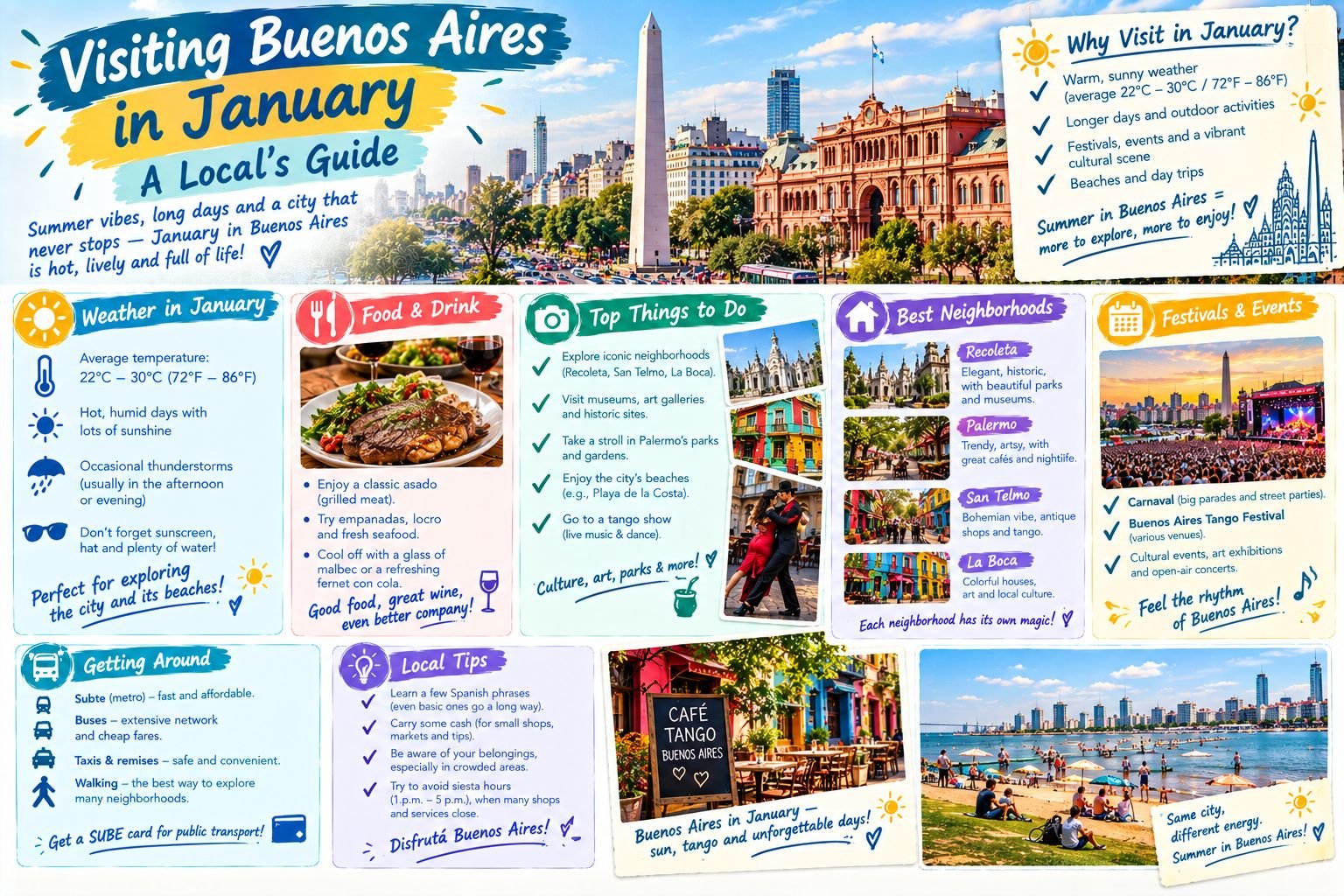
January is peak summer in Buenos Aires, and it is also the month locals themselves leave town, which makes for one of the more unusual visitor experiences the city offers: a genuinely major world capital running at reduced capacity while its own residents are at the beach.
By Natalia Romero · Plan Your Trip → Best Time to Visit → January
Weather in January
January is the hottest month of the year in Buenos Aires, with daytime highs regularly reaching 30-32°C (86-90°F) and high humidity that makes the heat feel more intense than the numbers suggest. Afternoon thunderstorms are common, arriving suddenly and clearing quickly, and evenings stay warm well into the night. Pack light, breathable clothing, and don’t underestimate how much the humidity affects comfort compared to a “dry” 30°C elsewhere.
What January Actually Feels Like: The Great Porteño Exodus
Argentines, particularly middle and upper-middle class porteños, traditionally take their main summer holiday in January or February, decamping to the Atlantic coast (Mar del Plata, Pinamar, Villa Gesell) or further afield. The practical effect on Buenos Aires is significant: some smaller neighbourhood restaurants and family businesses close for two to four weeks, traffic thins out noticeably, and the city’s normal frenetic energy drops several notches, particularly outside the main tourist areas. Major attractions, restaurants in Palermo and Recoleta catering to tourists, and hotels all continue operating normally, so this rarely affects a visitor’s itinerary directly, but it’s worth knowing about as part of understanding the city’s rhythm this month.
Why Visit in January Anyway
Despite the exodus, or arguably because of it, January has real appeal. The city is quieter and less congested than during the rest of the year, accommodation availability is generally good outside of the New Year period itself, and the long, warm evenings suit Buenos Aires’ outdoor café and rooftop bar culture particularly well. This is also peak season for international visitors, so don’t mistake the quieter local presence for a quiet tourist experience; popular attractions still see solid crowds.
What to Do in January
The parks come into their own this month: Bosques de Palermo’s lakes and shaded paths offer relief from the heat, and an early morning or early evening walk avoids the worst of the midday sun. Puerto Madero’s riverside promenades catch a breeze off the water that makes them noticeably more comfortable than inland streets during peak afternoon heat. Rooftop pools and bars, increasingly common across Palermo’s boutique hotels, are a genuinely good way to handle a hot Buenos Aires afternoon the way locals who haven’t left for the coast do.
Indoor options are worth building into a January itinerary specifically to escape the midday heat: the city’s museums, MALBA, the Museo Nacional de Bellas Artes, and others, are air-conditioned and substantial enough to fill a comfortable few hours in the hottest part of the day.
Events and Culture in January
January is a quieter month for major cultural events compared to the packed calendars of spring and autumn, largely because so much of the city’s own cultural infrastructure and audience is on holiday. What does continue: outdoor summer cinema screenings in some parks, informal live music in plazas, and the ongoing rhythm of milongas, which run year-round regardless of season and are, if anything, a pleasant evening escape from daytime heat.
Practical Tips for a January Visit
Book accommodation with air conditioning specifically confirmed, not just listed, since older buildings and some budget accommodation can have inconsistent cooling. Stay hydrated and pace outdoor sightseeing around the cooler parts of the day, late morning and early evening, rather than the midday peak. If your trip includes New Year’s Eve itself, note that Buenos Aires celebrates with a genuinely spectacular fireworks display across the city, visible from many rooftop bars and open spaces, worth planning around specifically if your dates align.
Where January Suits Different Travellers
Visitors who prioritise a lively, well-populated tourist experience over local authenticity generally do well in January regardless of the porteño exodus, since the international visitor presence more than compensates in the neighbourhoods that matter most for a first-time trip. Visitors specifically seeking a quieter, more contemplative version of the city, extended museum time, unhurried café mornings, longer conversations with the local business owners who do stay open, often find January’s reduced local bustle a genuine asset rather than a drawback. Families with school-age children travelling during the northern hemisphere’s winter break make up a meaningful share of January’s international visitors, and the city’s parks, museums, and family-friendly infrastructure handle this well; see our Buenos Aires with kids guide for the detail.
A Note on New Year’s Eve Logistics
If your trip specifically includes New Year’s Eve, book restaurant reservations and any rooftop bar plans well in advance, since the best vantage points for the midnight fireworks display fill up early. Public transport can also run on a modified or reduced schedule around midnight itself, so plan your return to accommodation accordingly, whether that means booking somewhere within walking distance of your evening plans or arranging a taxi or rideshare in advance rather than assuming one will be readily available at 1am on New Year’s Day.
Sample January Days
A first-time visitor with three or four days in January might reasonably structure the trip around the heat rather than against it: mornings in Palermo’s parks and Recoleta’s cemetery and museums before the midday sun peaks, an indoor lunch or a shaded parrilla courtyard through the hottest hours, then afternoon and evening reserved for San Telmo’s antiques market (Sundays specifically), a river-cooled walk in Puerto Madero, or a rooftop bar as the temperature finally breaks in the evening. Building in a pool afternoon, whether at a hotel or a day pass to one of Palermo’s boutique properties, is less an indulgence than a practical concession to the month’s genuine heat.
Frequently Asked Questions About Visiting in January
Is January too hot to enjoy Buenos Aires? Not if you plan around it. Mornings and evenings remain pleasant; it’s specifically the early-to-mid afternoon window, roughly noon to 4pm, that calls for indoor or shaded activity.
Will restaurants and shops be closed? Some smaller, family-run businesses close for a portion of the month, but restaurants, hotels, and attractions in the main tourist neighbourhoods operate normally throughout January.
Is January a good month for a beach-and-city combination trip? Yes, and it’s a common local pattern too: several days in Buenos Aires bookending a stint on the Atlantic coast works well logistically, since domestic flights and buses to the main coastal towns run frequently this month given how many Argentines are making the same journey.
Related: Best Time to Visit | Buenos Aires Travel Costs | Packing Guide | Puerto Madero

Hi, I’m Natalia, an Argentine writer born and raised in Buenos Aires, and I’ve been writing about this city for 9 years.
I cover Buenos Aires the way only a local can: the neighbourhoods that don’t make the highlight reels, the ferias worth getting up early for, the parrillas where the menu isn’t in English, and the safety picture by barrio — honest, not sanitized. I’ve taken 40+ solo trips across Argentina, Uruguay, Chile, Bolivia and Peru, and I write in both Spanish and English, which means the local forums, neighbourhood Facebook groups and municipal notices that never get translated are all fair game for me.
My writing covers two things I know from the inside: Buenos Aires as a destination — what to do, where to stay, how to navigate the city as a visitor — and Buenos Aires as a place to live. The expat life content comes from real experience: the paperwork that defeats everyone, the healthcare system that surprises you, the cost of living that changes faster than any guidebook can track, and the parts of porteño life that make it worth all of it.
If you’re visiting for a week or moving here for a year, I aim to be the honest friend who actually lives here — not the one who visited once and wrote a listicle.