
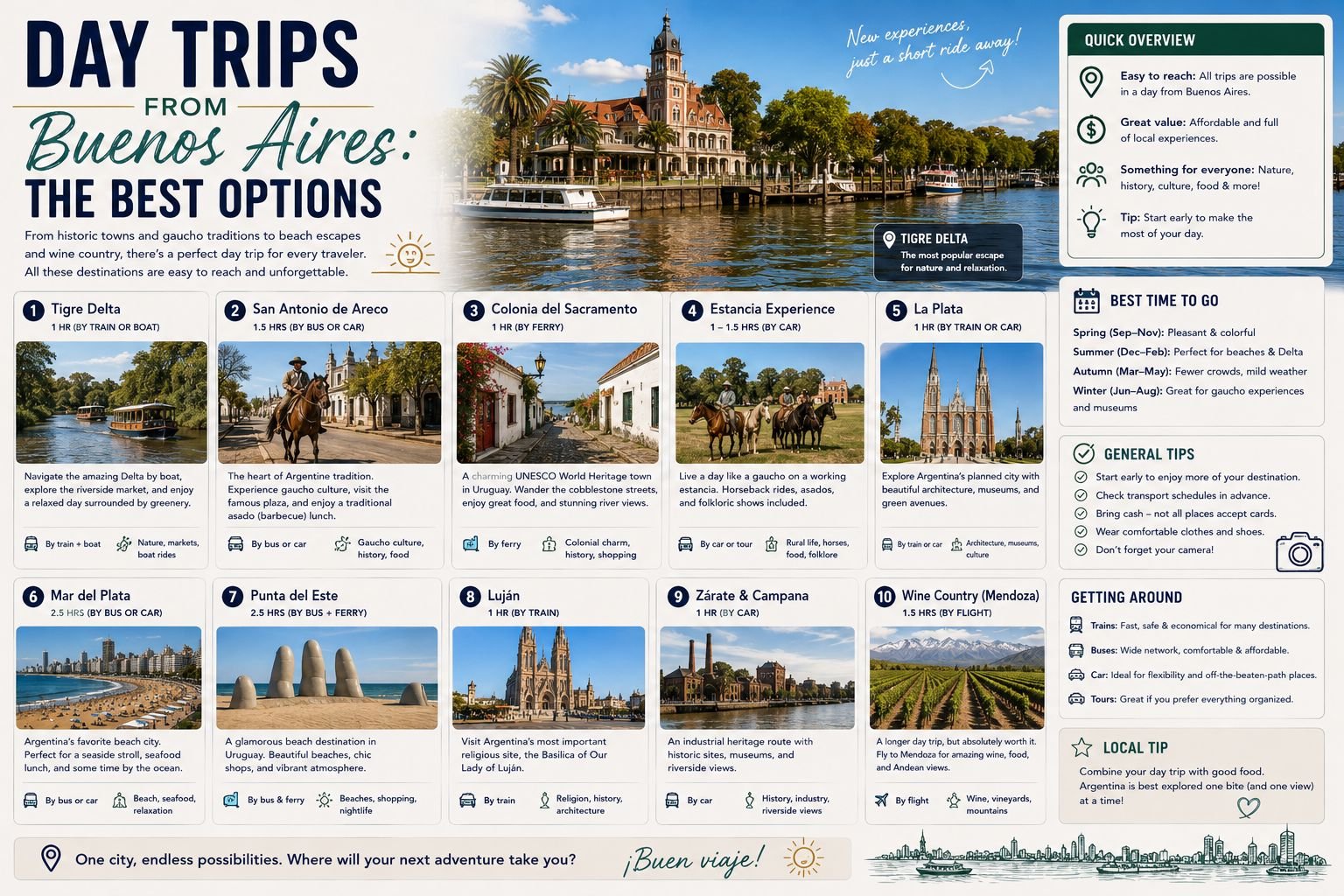
Buenos Aires’ position at the edge of the Río de la Plata, the vast estuary that separates Argentina from Uruguay, and its proximity to the Pampas grasslands, the Tigre river delta, and the Argentine coast means the day trip options from the city are genuinely exceptional. Two in particular, Colonia del Sacramento and Tigre, are must-do experiences for any visit of five days or more.
Colonia del Sacramento, Uruguay
The best day trip from Buenos Aires and one of the best day trips in South America. A 1 to 3 hour ferry crossing of the Río de la Plata brings you to the most perfectly preserved colonial town in the region: cobblestone streets, 17th-century Portuguese fortifications, a lighthouse with views over the river, and a pace of life that feels entirely unlike Buenos Aires.
Colonia was founded by the Portuguese in 1680 as a smuggling base on the silver trade route; its strategic position made it the object of repeated dispute between the Portuguese and Spanish empires, and the town passed back and forth between the two several times. The result is a town that preserves its 17th and 18th century fabric almost intact: the Barrio Histórico (UNESCO World Heritage Site since 1995) has original cobblestones, colonial houses, a 1680 lighthouse, and the ruins of a Portuguese convent.
The Tigre Delta
Thirty-five minutes by suburban train from Retiro station, the Tigre river delta is a completely different world from Buenos Aires: a network of river islands and waterways where old delta houses sit on stilts, rowing clubs have been operating since the 1870s, and the pace of life is set by the tides rather than the traffic.
The Tigre Delta is used by Buenos Aires residents as a weekend escape; the lower delta around the Puerto de Frutos market and the first delta islands is easily accessible by public transport and a leisurely boat tour. The upper delta, with its more remote communities and natural landscape, requires more time or a dedicated tour.
San Antonio de Areco: Gaucho Country
90 minutes west of Buenos Aires by bus, San Antonio de Areco is the heartland of Argentine gaucho culture: a small, graceful colonial town on the Pampa with artisan leather and silverwork shops, the Museo Gauchesco Ricardo Güiraldes (dedicated to the author of the classic gaucho novel Don Segundo Sombra), and the estancia culture of the surrounding Pampas.
The town is best visited on the weekend of the Festival de la Tradición in November, when the gaucho culture is on full display with parades, horsemanship demonstrations, and folk music. Outside this period, the town is quiet and pleasant; several estancias in the surrounding area offer day packages including asado, horsemanship displays, and the Pampa landscape.
Mar del Plata: The Argentine Coast
Four to five hours south by bus (buses from Retiro are frequent and comfortable), Mar del Plata is Argentina’s premier coastal resort city: a large, sprawling city with beaches, a casino, excellent seafood restaurants, and the infrastructure of a city that handles millions of summer visitors. It is at its best and most crowded in January and February; it is more pleasant to visit in the shoulder season (March to May, October to November) when the beaches are emptier and the seafood restaurants have more room.
Mar del Plata is too far for a comfortable day trip unless you are travelling by private car or are an enthusiastic bus traveller; it works better as a two-day overnight trip.
Iguazú Falls: The Longer Trip Worth Making
Technically not a day trip, Iguazú Falls is worth mentioning as the most extraordinary single natural attraction within reach of Buenos Aires: the world’s widest waterfall system, on the border between Argentina and Brazil, accessible by a 90-minute flight or overnight bus from Buenos Aires. If your visit is a week or more, a two-night detour to Iguazú produces one of the most spectacular natural experiences in the world.
Practical Notes for Day Trips
Booking: The Colonia ferry should be booked in advance, particularly on weekends. The Tigre train does not require booking. San Antonio de Areco buses run frequently from Retiro and do not usually need advance booking.
Passports: Colonia del Sacramento is in Uruguay and requires a passport for the crossing. Ensure your passport is valid and that you have the current entry requirements for both Uruguay (re-entering Argentina) and Argentina (re-entering from Uruguay).
Timing: Colonia requires a full day (leave Buenos Aires by 8am or 9am to maximise time in the town). Tigre can be done in a half-day. San Antonio de Areco is best as a full day.
Related: Colonia del Sacramento | Tigre Day Trip | Plan Your Trip | Things to Do Hub
Planning Your Day Trips Efficiently
For a visit of five to seven days, two day trips are feasible and recommended. The best combination for most visitors:
Colonia del Sacramento as the international option: genuinely different country, different architecture, ferry crossing, UNESCO heritage. This is the more memorable and the one that produces the strongest contrast with Buenos Aires.
Tigre Delta as the natural option: accessible by suburban train, completely different landscape from the city, and possible as a relaxed half-day rather than requiring a full day commitment.
The two trips complement each other well because they deliver completely different experiences: Colonia is historical, architectural, urban in its own distinctive way; Tigre is natural, watery, and about a specifically Argentine form of outdoor leisure culture.
Day Trips That Require More Planning
Mendoza wine country: A flight (90 minutes from Aeroparque) or overnight bus (12 to 14 hours) from Buenos Aires. Best as a two to three night side trip rather than a day trip. The wine, the Andes backdrop, and the vineyard culture make it one of Argentina’s most rewarding destinations for visitors with any wine interest.
Iguazú Falls: A 90-minute flight from Ezeiza. Best as a two-night minimum (one full day at the Argentine side, optionally one at the Brazilian side). One of the world’s great natural spectacles and worth the diversion from a Buenos Aires trip if time allows.
Mar del Plata: Four to five hours by bus from Retiro. Best as a two-night trip in shoulder season (March-April or October-November) when the beaches are emptier and the seafood restaurants have more room than in peak summer.
The day trips guide focuses on what can realistically be done in a single day from Buenos Aires; the longer side trips are covered in the broader Argentina travel content.
Day trips from Buenos Aires are among the most rewarding additions to a longer visit. The transition from a major city to a colonial Uruguayan town, or from the urban density of Palermo to the river islands of the Tigre Delta, produces a dramatic contrast that refreshes the perspective and provides context for Buenos Aires itself. At least one day trip is strongly recommended for any visit of five days or more.
A Final Note
Buenos Aires rewards visitors who arrive prepared and remain open. The practical preparation covered in this guide removes the friction that prevents engagement; the openness is yours to bring. The city that reveals itself to a visitor who knows what they are looking for, who has sorted the practical foundations, and who has the curiosity to follow what the city offers is one of the genuinely great urban experiences available anywhere in the world.
For questions, corrections, or feedback on this guide, the contact page is the right place. This site is updated regularly; if you visit Buenos Aires and find that conditions have changed from what this guide describes, telling us makes the guide better for the next reader.
Day trips from Buenos Aires expand the visit from a single city experience to an introduction to the wider southern South American region. The contrast between the vast Argentine metropolis and the colonial Uruguayan town across the river, or between the urban density of Palermo and the river islands of the Tigre delta, is one of the specific pleasures of Buenos Aires geography. At least one day trip is strongly recommended for any visit of five days or more.
Buenos Aires rewards the traveller who arrives prepared and remains curious. Every guide in this site is designed to remove the friction between arrival and genuine engagement with the city; the engagement itself is yours to pursue. The city is inexhaustible, genuinely warm, and consistently surprising even to those who have been here many times. Whatever brings you to Buenos Aires, whether a first visit, an extended stay, or the beginning of a longer Argentine chapter, the preparation this guide provides is the starting point. What comes next is the city’s contribution.