
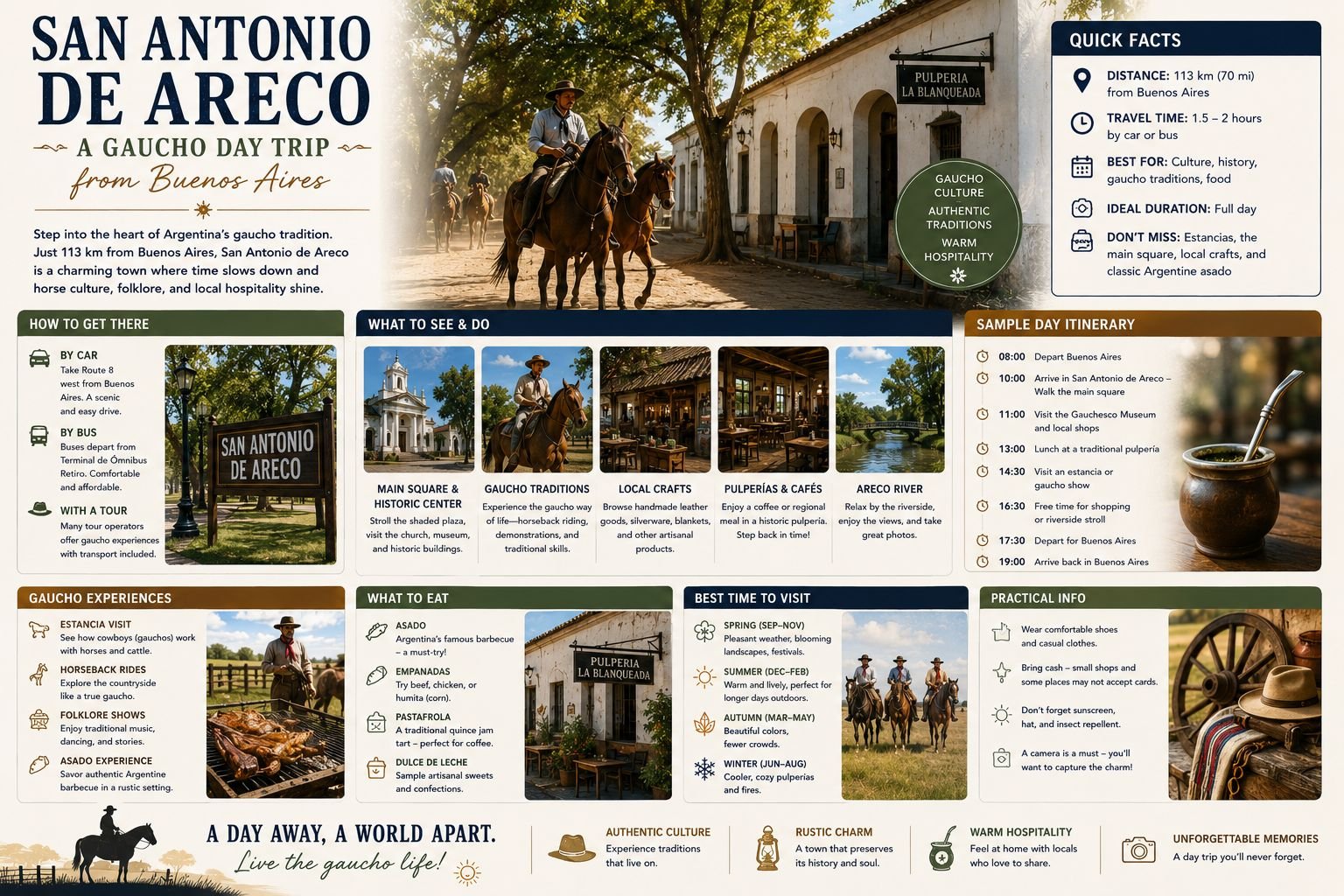
If Tigre gives you the river delta and Colonia gives you a colonial Uruguayan town across the water, San Antonio de Areco gives you the third essential Buenos Aires day trip: the pampas, and the gaucho culture that defines rural Argentina every bit as much as tango defines the capital. It is less visited by international tourists than the other two, which is part of its appeal.
Why San Antonio de Areco
San Antonio de Areco is a small colonial town about 110 kilometres northwest of Buenos Aires, generally considered the spiritual home of gaucho culture and traditional silverwork. Founded in the early eighteenth century, it has preserved its low colonial architecture, cobbled streets, and pulperías (traditional country stores and bars) more completely than almost anywhere else in the region, largely because it never industrialised or expanded the way many other pampas towns did.
The town is closely associated with Ricardo Güiraldes, whose 1926 novel Don Segundo Sombra romanticised gaucho life and cemented Areco’s identity as its living symbol. That literary connection, plus the town’s genuine, ongoing tradition of silversmithing and leatherwork, gives it a cultural weight well beyond its small size.
Getting There
San Antonio de Areco is roughly ninety minutes to two hours from Buenos Aires by road. Options include organised day tour buses (the simplest choice and the one most visitors take), a rental car for those who want flexibility, or intercity bus services from Retiro bus terminal, which run regularly and are inexpensive, though they require you to arrange your own transport around town once you arrive since the centre is walkable but the estancias are not.
What to Do in Town
Walk the historic centre: The core of San Antonio de Areco, particularly around Calle Arellano and the Parque San Martín, is a genuinely well-preserved slice of nineteenth-century pampas architecture. It rewards an unhurried wander more than a checklist of sights.
Visit a silversmith workshop: Areco’s platería (silverwork) tradition, particularly the ornate gaucho knives, belt buckles, and mate implements, is considered the finest in Argentina. Several working silversmith studios in town welcome visitors and sell directly.
Museo Gauchesco Ricardo Güiraldes: A museum dedicated to gaucho culture and the literary legacy of Don Segundo Sombra, housed in a building designed to evoke a traditional estancia.
Puente Viejo: The old colonial bridge over the Areco river is the most photographed spot in town and a pleasant place to sit for a while.
The Estancia Experience
The main draw for most day-trippers is not the town itself but a visit to one of the traditional estancias (ranches) in the surrounding countryside, several of which run full-day visitor programmes aimed specifically at travellers from Buenos Aires. A typical estancia day includes a horseback riding demonstration or lesson, a folk music and dance performance, a traditional asado lunch (often extraordinary, cooked over an open fire for hours), and time to simply sit on a porch and experience the pace of rural Argentine life, which is the entire point.
Estancia La Bamba de Areco and Estancia El Ombú are among the best regarded of the visitor-oriented estancias, though there are several good options and most day tours have their own arrangement with a particular property.
When to Go
San Antonio de Areco’s biggest annual event is the Día de la Tradición (Day of Tradition) in November, a major gaucho festival with parades, horsemanship displays, and folk celebrations that draws visitors from across the country. It is an extraordinary experience if your dates align, though also the busiest and most crowded time to visit. Outside of that, any season works, though the estancia experience is naturally more pleasant in spring and autumn than in the height of summer heat or winter cold.
Practical Notes
Bring cash; while the town is more tourist-oriented than it once was, smaller shops and pulperías still often prefer it. Wear comfortable walking shoes for the cobbled streets, and if you are doing an estancia visit with horseback riding, closed shoes are required regardless of what you wear into town.
Related: Day Trips | Colonia del Sacramento | Tigre Delta | Things To Do