
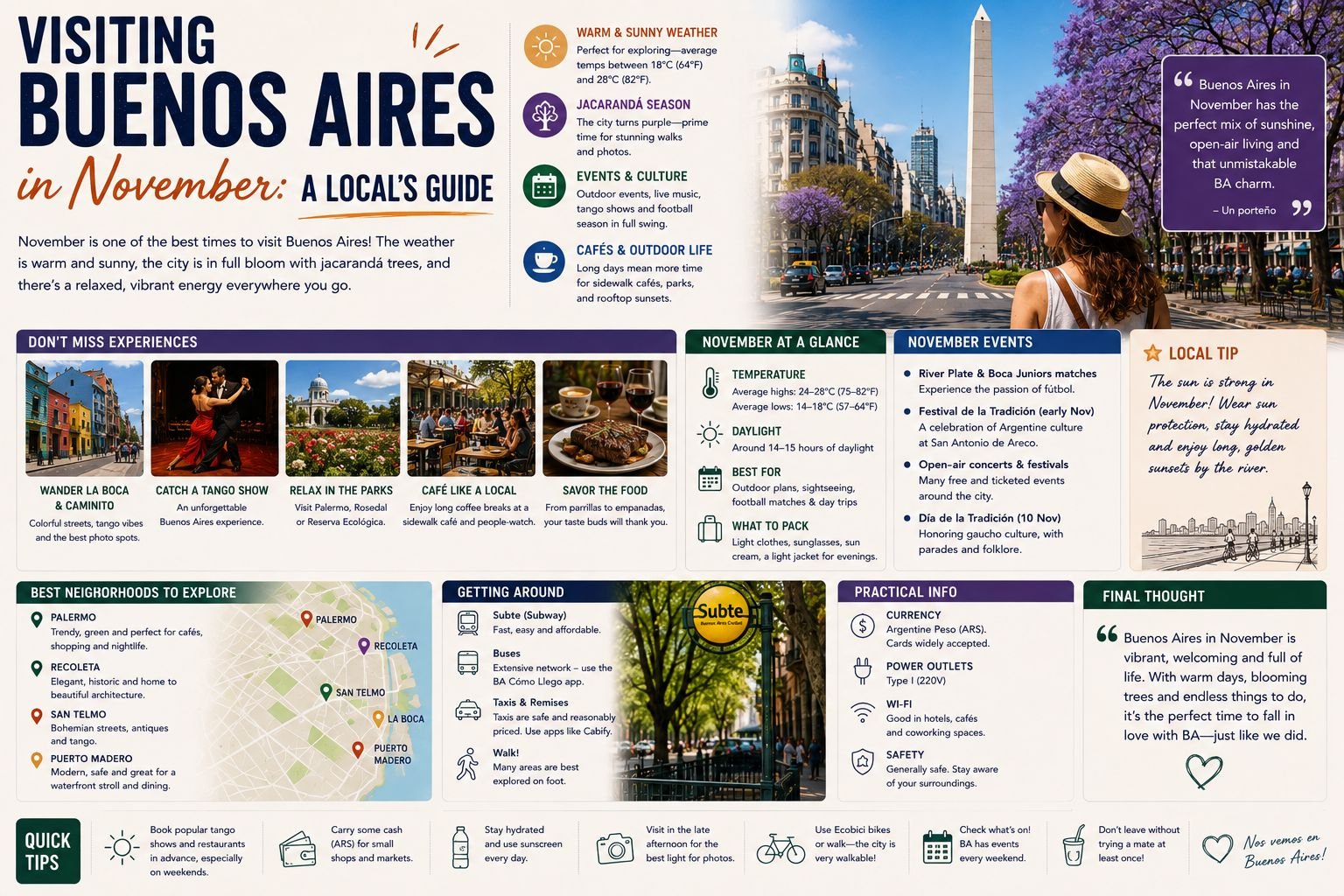
November is late spring in Buenos Aires, warm and largely dry, and it carries one of the fullest events calendars of the year, from a major gaucho festival to the city’s Pride march to the start of the polo season’s biggest tournament.
Weather in November
November brings genuinely warm, pleasant weather, with highs typically in the mid-to-high 20s°C (mid-70s to low 80s°F) and low humidity compared to the summer months proper. This is generally considered one of the most comfortable stretches of weather the city offers all year, warm enough for full outdoor days without summer’s oppressive heat and humidity.
Events and Culture in November
Día de la Tradición: Argentina’s major gaucho and folk culture festival, centred especially on San Antonio de Areco, the pampas town most closely associated with gaucho heritage, which hosts an extensive festival with parades, horsemanship displays, and traditional celebrations. A worthwhile day trip from Buenos Aires if your dates align; see our San Antonio de Areco guide for the full detail.
March of Pride (Marcha del Orgullo): Buenos Aires’ Pride march, one of the largest and longest-running in Latin America, typically takes place on the first Saturday of November, commemorating the founding of Argentina’s first LGBT organisation in 1967. A significant, celebratory event that draws large crowds through the city centre.
Argentine Open Polo Championship: The most prestigious leg of Argentina’s Triple Crown of polo begins around this time at the Campo Argentino de Polo in Palermo, running into early December. Even for visitors with no prior interest in polo, attending a match offers a genuinely distinctive slice of Argentine elite sporting culture; see our polo guide for the detail.
What to Do in November
November’s reliably warm, comfortable weather makes it an excellent month for the full range of Buenos Aires’ outdoor offerings: extended park time in Bosques de Palermo, comfortable long walks through Recoleta and San Telmo, and outdoor café and rooftop bar culture all suit the month well without the intensity of the peak summer heat that arrives in December.
This is also a strong month for day trips, with Tigre’s delta, San Antonio de Areco’s gaucho culture, and estancia visits all benefiting from the pleasant, dry spring weather.
Crowds and Pricing
November sits toward the busier end of the shoulder season as visitor numbers build toward the December-February peak, with correspondingly higher pricing than the deeper autumn and winter months, though generally still more manageable than the height of summer. Book accommodation and any Argentine Open polo tickets somewhat ahead if your dates fall within the tournament.
Practical Tips for a November Visit
Light, warm-weather clothing suits the month well, though the occasional cooler evening can still occur early in the month. If Día de la Tradición or the Pride march fall within your trip, both are genuinely worth building itinerary time around specifically, and if attending Pride, expect significant road closures through the central march route.
November as the Last Comfortable Month Before Summer
November occupies a particular sweet spot in the Buenos Aires calendar: the last month before summer’s full heat and humidity arrive, meaning visitors get spring’s comfortable temperatures with none of the compromises that October’s still-building crowds or December’s rising heat bring. This makes November a strong choice for visitors who want warm-weather activities, outdoor dining, park time, day trips, without either the shoulder-season unpredictability of earlier spring or the peak-season intensity of full summer.
Attending the Argentine Open
For visitors specifically interested in the Argentine Open polo tournament, note that the final rounds in early December draw the largest crowds and the most significant social occasion around the matches, including a fashion and society scene that’s part of the event’s appeal beyond the sport itself. Earlier November matches in the tournament are generally more accessible and less crowded, a good option for visitors who want to experience the sport without the full scale of the championship finals.
Sample November Days
November’s reliable warmth suits an itinerary front-loaded with outdoor activity: full park mornings, an estancia day trip or a visit to a polo match, extended evening café and rooftop time without needing to plan around either heat or cold. If Día de la Tradición falls within your trip, dedicate a full day to San Antonio de Areco rather than treating it as a rushed half-day excursion, the festival atmosphere rewards the extra time.
Frequently Asked Questions About Visiting in November
Is November hotter than October? Yes, noticeably, building toward summer’s full heat, though November remains well short of the intensity of December through February.
Should I book Argentine Open tickets in advance? For the championship finals in early December specifically, yes; earlier November matches in the tournament are generally easier to attend with less advance planning.
Is November a good month for the Pride march? Yes, if your dates align with the first Saturday of the month, it’s a significant, celebratory event worth experiencing, though expect substantial crowds and road closures along the route that day.
Related: Best Time to Visit | October in Buenos Aires | December in Buenos Aires | San Antonio de Areco

Hi, I’m Natalia, an Argentine writer born and raised in Buenos Aires, and I’ve been writing about this city for 9 years.
I cover Buenos Aires the way only a local can: the neighbourhoods that don’t make the highlight reels, the ferias worth getting up early for, the parrillas where the menu isn’t in English, and the safety picture by barrio — honest, not sanitized. I’ve taken 40+ solo trips across Argentina, Uruguay, Chile, Bolivia and Peru, and I write in both Spanish and English, which means the local forums, neighbourhood Facebook groups and municipal notices that never get translated are all fair game for me.
My writing covers two things I know from the inside: Buenos Aires as a destination — what to do, where to stay, how to navigate the city as a visitor — and Buenos Aires as a place to live. The expat life content comes from real experience: the paperwork that defeats everyone, the healthcare system that surprises you, the cost of living that changes faster than any guidebook can track, and the parts of porteño life that make it worth all of it.
If you’re visiting for a week or moving here for a year, I aim to be the honest friend who actually lives here — not the one who visited once and wrote a listicle.