
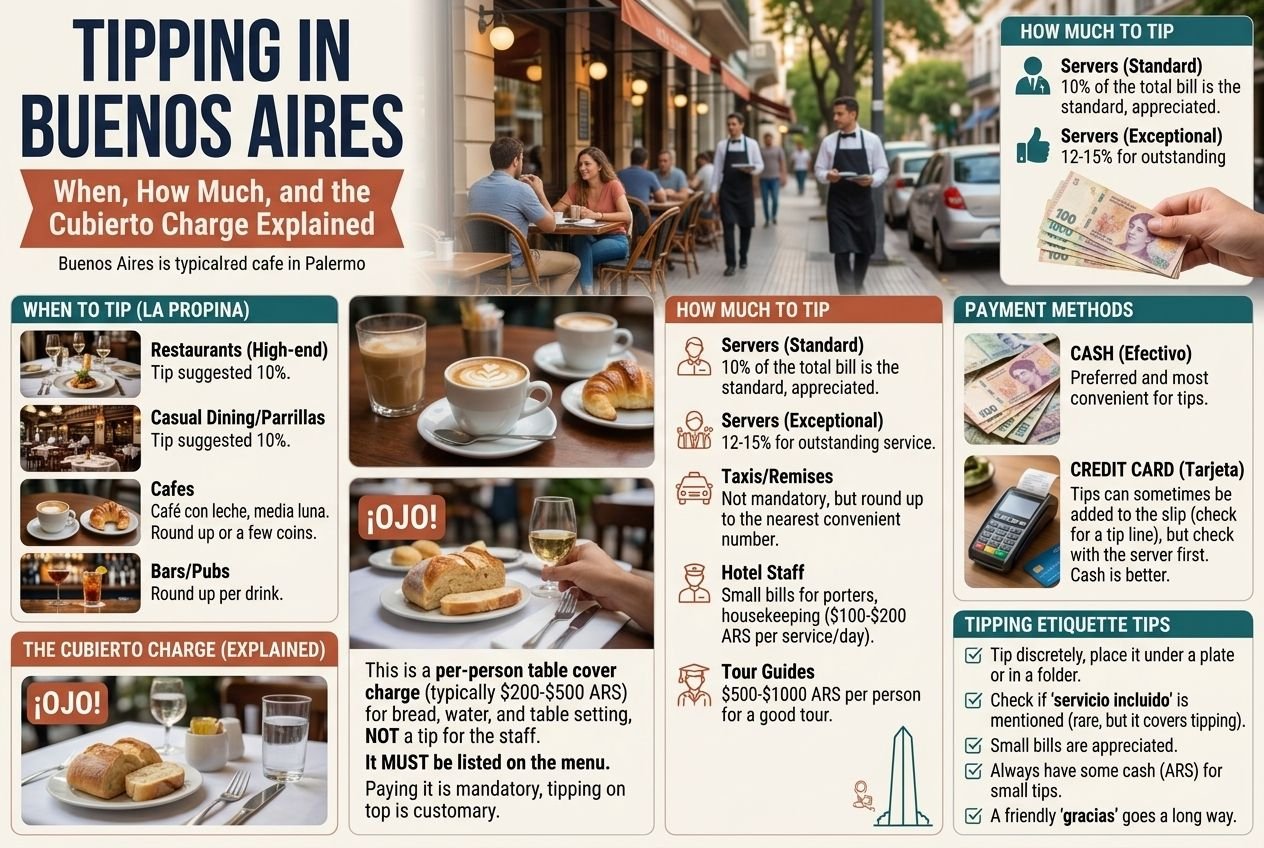
Tipping culture in Argentina sits somewhere between the US and Europe, different enough from both that most first-time visitors get at least one part of it wrong on their first restaurant bill. This guide covers the two things that trip people up most: what’s actually expected as a tip, and what that separate, unfamiliar “cubierto” line on the bill actually is.
The Cubierto Charge, Explained
Cubierto literally means “cover charge,” and it’s a per-person fee added to the bill at many sit-down restaurants, particularly parrillas and traditional bodegones. Typically ARS 2,000-5,000 per person (roughly $2-5 USD, depending on the exchange rate at the time).
It is not a tip. The cubierto goes to the restaurant, not the staff, and it’s separate from whatever gratuity you leave afterward. It generally covers the table setup (the bread basket, butter, and dips that arrive without being ordered), table linens, and general service, and in some restaurants it also covers table water (agua de mesa), though not universally, so don’t assume it if you specifically want tap water rather than paying for bottled.
By law, restaurants must display the cubierto charge somewhere on the menu, so it shouldn’t come as a complete surprise if you check before ordering. It’s not charged everywhere: cafés, bars, fast food, and most modern or hip restaurants skip it entirely, while traditional parrillas and restaurants in heavily touristed areas almost always include it. If a restaurant charges cubierto, you still tip separately on top of it; the two charges serve entirely different purposes.
A worked example: food and drinks come to ARS 25,000 for two people, plus a cubierto of ARS 6,000 (two people), bringing the subtotal to ARS 31,000. A 10% tip on that subtotal adds roughly ARS 3,100, for a total of around ARS 34,100.
How Much to Tip in Restaurants and Cafés
Tipping in Buenos Aires restaurants is expected, but modest by international standards. The standard is 10% of the bill, paid in cash even if you settled the bill itself by card, since many places don’t process tips through the card machine. Rounding up small café bills is also perfectly normal and doesn’t need to hit a precise 10%.
As a worked example: a bill of ARS 10,000 would typically see a tip of around ARS 1,000 left in cash on the table.
Not tipping at all in a restaurant is considered rude if the service was good, so this isn’t a fully optional gesture the way it can feel in some tipping cultures; treat 10% as the genuine baseline rather than a maximum.
Tipping Beyond Restaurants
Bars: Not strictly expected, but rounding up or leaving a few hundred pesos is appreciated, particularly at a bar with table service rather than ordering directly at the counter.
Taxis and rideshares (Uber, Cabify, Didi): Not expected. Locals typically round up to the nearest 500 or 1,000 pesos rather than calculating a percentage. Ride-hailing apps don’t always make tipping easy to add digitally, so a small cash tip handed over directly is the more common approach when tipping at all.
Hotels: Porters typically receive ARS 1,000-2,000 per bag; housekeeping ARS 2,000-3,000 per night, left in the room; concierge staff a discretionary tip if they’ve secured a hard-to-get reservation or tickets on your behalf.
Tour guides and excursions: Group tours typically ARS 3,000-5,000 per person; private tours around 10% of the tour price; free walking tours (which operate on a pay-what-you-feel model rather than a fixed fee) typically ARS 10,000-15,000, roughly $10-15 USD at the tourist exchange rate.
Hairdressers and spas: Around 10% of the service cost, similar to the restaurant standard.
Quick Reference
Cash is genuinely important for tipping in Buenos Aires; many places don’t support adding a tip through a card payment, so carrying some cash specifically for this purpose makes the whole process considerably smoother. Locals tip less generously than is typical in the US, but more consistently and reliably than is often the case in parts of Europe, where tipping can be more occasional.
Treat 10% as the reliable default across restaurants, tours, and personal services, adjust taxis and bars toward simple rounding rather than a calculated percentage, and always keep the cubierto charge mentally separate from your tip; they are not the same line, and mixing them up is the single most common tipping mistake visitors make in Buenos Aires.
Related: Best Parrillas | Money & Currency | Blue Dollar Guide | Scams to Avoid