
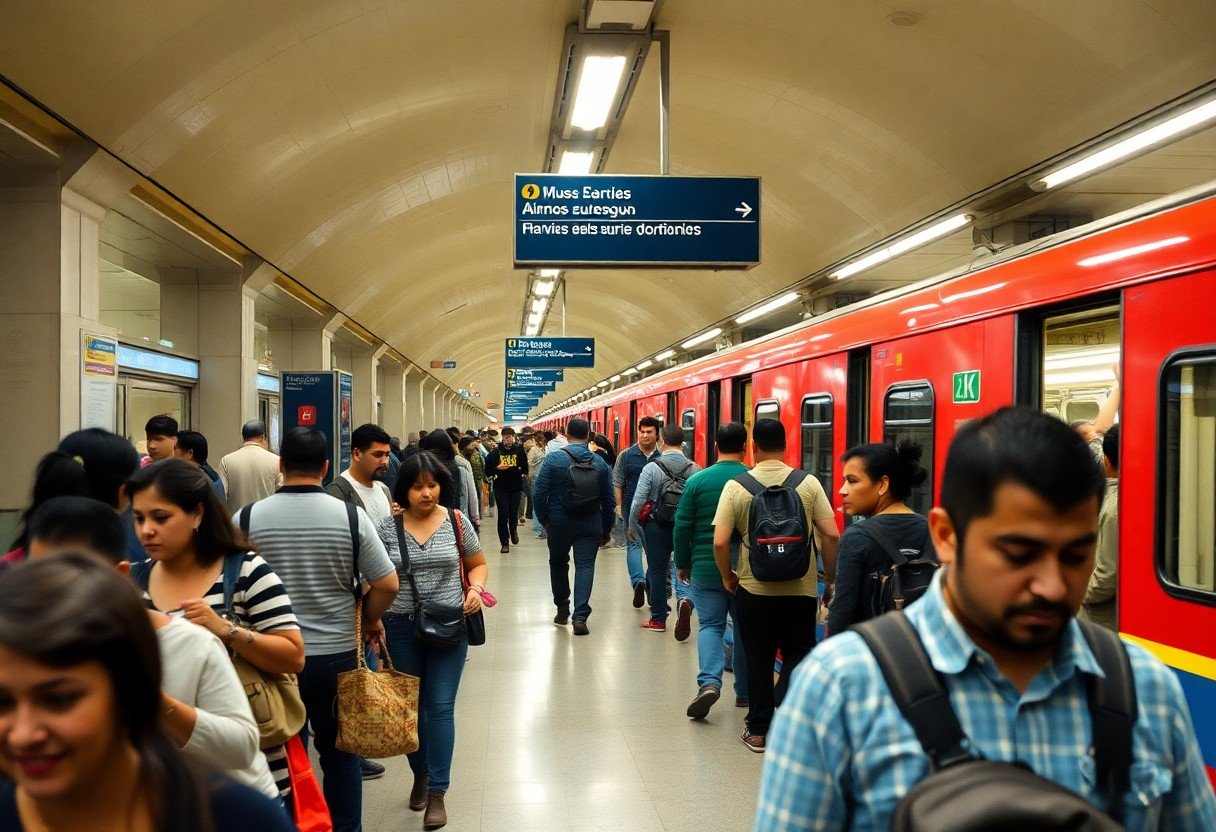
The Subte, as Buenos Aires calls its metro, is the fastest way to cross the centre of the city, and it ignores the traffic that can double a taxi ride at rush hour. It does not reach everywhere, though. This guide covers which lines matter for visitors, how to pay, and where you will need a bus or a walk instead. For the wider picture, see our Getting Around Buenos Aires guide.
The Six Lines at a Glance
There are six lines, named by letter: A, B, C, D, E and H. Each has its own colour on maps and station signs.
- Line A (light blue): runs from Plaza de Mayo west under Avenida Rivadavia to San Pedrito. It is the oldest line in the network and passes Congreso.
- Line B (red): runs from Leandro N. Alem, near the financial district and Puerto Madero, under Avenida Corrientes through the Obelisco area, Once and Villa Crespo to Juan Manuel de Rosas.
- Line C (blue): the north-south connector between the Retiro and Constitucion railway stations, passing through the downtown core. It links with every other line.
- Line D (green): runs from Catedral, beside Plaza de Mayo, up through Tribunales, Recoleta and Palermo to Congreso de Tucuman in Belgrano. For most visitors staying in the northern barrios this is the most useful line.
- Line E (purple): runs from Retiro southwest through San Jose, Independencia and Boedo to Plaza de los Virreyes.
- Line H (yellow): a north-south line on the western side of the centre, running between Facultad de Derecho and Hospitales.
The downtown stations Carlos Pellegrini (Line B), Diagonal Norte (Line C) and 9 de Julio (Line D) are connected, so you can change between those three lines without leaving the system.
Paying: You Need a SUBE Card
The Subte runs on the SUBE card, the same rechargeable card used for city buses and suburban trains. Plan on having one before you reach the turnstile, because stations are not a reliable place to buy a first card. Cards are sold at kiosks, lottery agencies and some shops, and at the airports. Our transport guide explains where to get one.
- Fares are charged per trip and are low by international standards. Prices change often with inflation, so check the current fare on the official transport pages rather than relying on a figure printed here.
- Tap the card on the reader at the turnstile to enter. You do not tap on exit.
- Changing from one line to another inside the network does not cost anything extra.
- Top up at SUBE points, kiosks and agencies before you travel. Keep enough balance for the whole day so you are not stuck at a gate.
Where the Subte Gets You, and Where It Does Not
Several of the most visited places have no station of their own, so it helps to know the closest stop.
- Plaza de Mayo and the Casa Rosada: Line A (Plaza de Mayo) or Line D (Catedral).
- Recoleta Cemetery: Line D, with Pueyrredon or Facultad de Medicina the usual stops, followed by a walk of about ten to fifteen minutes.
- Palermo: Line D to Plaza Italia or Palermo. From there Palermo Soho and Hollywood are on foot. See the Palermo guide.
- Obelisco and Avenida Corrientes: Line B (Carlos Pellegrini or Uruguay) or Line D (9 de Julio).
- San Telmo: there is no station in the barrio. Most visitors walk from Plaza de Mayo, or use Line C or E at Independencia and walk a few blocks. See the San Telmo guide.
- La Boca and Puerto Madero: no direct service. Use a bus, taxi or ride-hailing app. Line B at Alem is the nearest stop for Puerto Madero.
Hours and Service
As a guide, weekday service runs from about 5:30am to 11:30pm, Saturdays from about 6am to midnight, and Sundays and holidays from about 8am to 10:30pm. Line B runs later on Friday and Saturday nights. Hours change, so check the official schedule before you rely on a last train. The Subte does not run through the night, so plan another way home after a late dinner or a milonga. Frequency is good at rush hour, with trains every few minutes, and thinner at weekends.
Strikes and partial stoppages by transport workers happen from time to time, and a line can close with little notice. If you rely on the Subte for an airport transfer or a tight connection, check the day’s service status first and keep a backup plan.
Riding Tips
- Avoid the weekday peaks, roughly the early morning and the early evening, when carriages are packed.
- Let people off before you board, and move to the middle of the carriage rather than blocking the doors.
- Stations signpost lines by their end-of-line station. Check which direction you need by the last station name on the platform sign.
- Not every station has elevators or escalators, and many have long stairways, so step-free travel needs planning with luggage or reduced mobility.
- Pickpocketing is the main risk, concentrated at crowded stations and on packed trains. Carry your phone and wallet in a front or inside pocket and keep your bag closed in front of you. Our scams guide and safety guide have more.
Subte or Something Else?
Use the Subte for longer straight runs along its corridors, such as Palermo to the centre on Line D, or the downtown core to Congreso on Line A. For short hops between nearby barrios, walking is often as quick. For late nights, La Boca, Puerto Madero or anywhere the lines do not reach, buses and ride-hailing apps fill the gap.
Related: Getting Around Buenos Aires | Ezeiza to the City | Practical Info Hub